🐞 Spring Pest Control

Early-season pests, what to watch for, and how to stay ahead of problems naturally
Spring is a transition season—plants are tender, growth is rapid, and pests are just waking up. In my experience gardening in Northern California, the pests that show up first are the ones that matter most. If you manage them early, you often prevent the bigger infestations that come later.
This is a practical, experience-based guide to the first wave of spring pests and how to control them effectively—without overreacting or overusing products.
🐛 Aphids (First and Fastest)
When they appear
Late winter into early spring—often the very first pest you’ll see.
Where to look
Know What to Plant This Week
Every week I answer the gardener's most important question: what should I plant now? Get seasonal planting advice free — or go Pro for my full Soil Temperature Garden Report, with soil temperature, moisture, weather trends, and crop-by-crop recommendations.
- New growth on lettuce, kale, broccoli
- Undersides of leaves
- Stem tips and flower buds
What they do
- Suck sap → curled, sticky, distorted leaves
- Spread quickly in cool, mild weather
How to control
- Spray off with a strong stream of water (my first line of defense)
- Encourage beneficial insects (lady beetles, lacewings)
- Use insecticidal soap if populations build
From my garden
If I catch aphids early, a few strong sprays of water over several days usually solves the problem completely.
🐌 Slugs & Snails (Cool-Weather Feeders)
When they appear
Immediately with moisture—late winter through spring
Where to look
- Around seedlings
- Under boards, mulch, and dense foliage
What they do
- Chew holes in leaves
- Destroy seedlings overnight
How to control
- Hand-pick at dusk or early morning
- Use iron phosphate bait (safe and effective)
- Reduce hiding places (excess mulch, debris)
From my garden
I control them early or I lose crops. A few evenings of hand-picking in early spring makes a noticeable difference all season.
🐛 Cutworms (Silent Seedling Killers)
When they appear
Early spring, just as transplants go in
Where to look
- At soil level around stems
What they do
- Cut seedlings off at the base overnight
How to control
- Use collars (cardboard or plastic rings around stems)
- Clear debris where they hide
- Lightly cultivate soil before planting
From my garden
I’ve learned not to skip collars on tomatoes and peppers—especially in beds that had weeds or cover crops before planting.
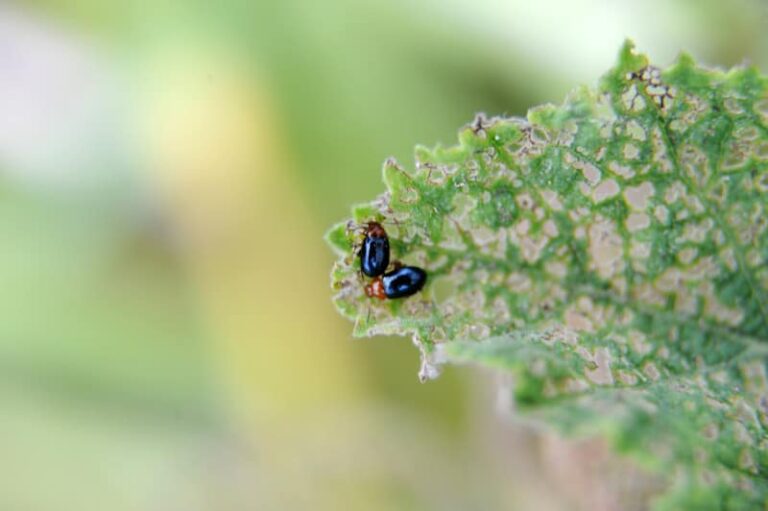
🐛 Flea Beetles (Tiny but Destructive)
When they appear
Early spring, especially as temperatures warm slightly
Where to look
- Arugula, radish, bok choy, eggplant seedlings
What they do
- Create tiny “shot holes” in leaves
- Can stunt or kill young plants
How to control
- Use row covers immediately after planting
- Keep plants growing quickly (healthy plants outgrow damage)
- Light dusting of diatomaceous earth if needed
From my garden
Row covers are the simplest and most reliable solution—especially for spring greens.
🐛 Cabbage Worms & Loopers
When they appear
Mid to late spring (after butterflies become active)
Where to look
- Undersides of brassica leaves
What they do
- Chew large holes in leaves
- Leave green droppings (a clear sign)
How to control
- Inspect regularly and hand-pick
- Use Bt (Bacillus thuringiensis) for heavier infestations
- Cover crops with insect netting
From my garden
If I stay consistent with inspection—just a minute or two per bed—I rarely need to use anything beyond hand-picking.
🐜 Ants (Aphid Farmers)
When they appear
Alongside aphids in early spring
What they do
- Protect aphids in exchange for honeydew
- Spread infestations
How to control
- Break the cycle: control aphids first
- Use barriers or baits if needed
From my garden
When I see ants climbing plants, I know aphids are already present—even if I don’t see them yet.
🐀 Vertebrate Pests (Birds, Rodents)
When they appear
Early spring as seeds and seedlings emerge
What they do
- Birds pull seedlings
- Rodents dig seeds or eat roots
How to control
- Use row covers or netting
- Protect newly planted beds
- Harvest promptly
From my garden
Newly planted beds are the most vulnerable. Once plants are established, damage drops significantly.
🌿 The Real Strategy: Early, Light, Consistent Action
Spring pest control is not about reacting—it’s about staying just ahead.
What works best
- Check plants 2–3 times per week
- Focus on new growth and undersides of leaves
- Act early with simple methods (water spray, hand removal, covers)
- Keep plants healthy—strong plants resist pests better
🌱 A Simple Weekly Routine
- Walk the garden slowly
- Turn over a few leaves in each bed
- Look at growing tips
- Check soil surface near stems
- Act immediately if you see a problem
From my garden
This takes me about 10–15 minutes for a full garden—and it prevents hours of work later.
🌞 Final Thought
Spring pests are predictable.
If you learn their timing and respond early, control becomes simple—and often effortless.