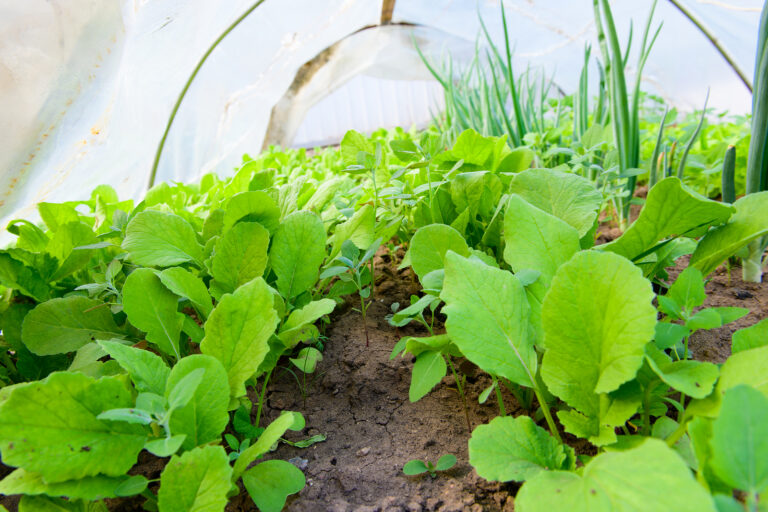
Winter Tunnel Planting Calendar: What to Grow and When for Winter Harvests (Zones 5–8)

How to plan, plant, and harvest winter vegetables under the protection of low tunnels, cold frames, or caterpillar tunnels—with insights from my years gardening in Iowa (Zone 5).
Winter gardening succeeds or fails by the calendar. In cold climates, plants must be established before deep winter arrives—because once day length drops below 10 hours, growth essentially pauses. Under a tunnel, hardy crops won’t grow much in mid-winter, but they will hold in perfect condition for months.
Below is a complete planting calendar, followed by practical tips drawn from my experience gardening through winter in Iowa’s Zone 5 and now gardening year-round in a milder climate.
Visit the Winter Garden and Season Extension Learning Hub
Why a Winter Tunnel Planting Calendar Matters
A winter tunnel—whether a simple PVC low tunnel or a more permanent cold frame—creates a microclimate that is:
- 5–15°F warmer than open air
- Protected from wind chill
- Shielded from frost and freezing rain
- Stable for winter harvesting
But the tunnel can only protect what was planted early enough. A calendar ensures you start hardy vegetables in time to size up before winter.
Winter Tunnel Planting Calendar (Zones 5–8)
(This section fits perfectly with the calendar you already have; the two work as companion pieces.)
July
Sow your long-season hardy crops—carrots, beets, kale, chard, collards.
In Iowa, July sowings gave me the best-sized winter carrots.
August
Plant fall and winter greens—spinach, lettuce, kohlrabi, Asian greens.
This month sets up Thanksgiving harvests.
September
Prime time for spinach, arugula, mache, radishes, and fall transplants.
In Zone 5, mid-September was my last reliable sowing window for winter salads.
October
Sow mache and claytonia; transplant spinach in Zones 6–8.
October plantings are for late winter and early spring harvests.
November
Finish tunnel setup—plastic tight, edges buried, vents ready.
Sow mache in Zones 7–8.
December–January
Growth pauses; harvest stored soil crops (carrots, beets) and leafy greens kept fresh under cover.
February
Begin sowing fast cool crops inside the tunnel again—spinach, radishes, arugula.
March
Transition to spring—spinach, lettuce, and early brassicas thrive under cover.
April
Your winter tunnel becomes a spring tunnel; sow beets, carrots, chard, and lettuces.
My Winter Growing Experience in Iowa (Zone 5)
My years gardening in Iowa taught me how far simple protection can go. Winters were long and cold, but even there, a well-built low tunnel extended the garden into December, January, and sometimes beyond.
Here’s what I learned:
1. Timing Is Everything
In Zone 5, anything sown after mid-September struggled to size up. But those same small seedlings overwintered beautifully and exploded with growth in March.
2. Double Cover Makes a Big Difference
I learned quickly that Zone 5 winters required two layers:
- Plastic tunnel
- Inner row cover (fleece)
That inner layer protected crops on nights when temperatures plunged below zero.
3. Root Crops Store Perfectly in the Soil
Carrots, beets, and even kohlrabi kept crisp and sweet under the tunnel—no cellar required. Sometimes in January I would brush aside snow, lift the plastic, and pull carrots as if it were October.
4. Snow Is Not the Enemy
Snow insulates. My Iowa tunnels often collapsed under snow loads, but the extra insulation kept everything alive. A quick brush-off restored the tunnel shape.
5. Winter Greens Are Sweeter After Frost
Spinach, mache, tatsoi, and winter lettuces all became dramatically sweeter after repeated freezes.
These lessons continue to shape how I garden now in a much milder climate.
What Crops Do Best in a Winter Tunnel?
Top Performers
- Spinach
- Mache
- Tatsoi
- Mizuna
- Arugula
- Winter lettuces
- Kale
- Collards
- Carrots
- Beets
- Radishes
- Asian greens
Temperamental or Less Suited
- Broccoli (great as fall crop, not winter)
- Cabbage (needs fall sowing for winter storage)
- Cauliflower (too cold-sensitive for mid-winter)
Protection Types That Work Best
1. Standard Low Tunnel
PVC or metal hoops + greenhouse plastic.
Best for Zones 6–8; good for Zone 5 with added inner cover.
2. Double-Cover Low Tunnel
Plastic cover + inner row cover.
Best for Zone 5 or windy, exposed sites.
3. Cold Frame
Wood frame + polycarbonate or storm window lid.
Heats up faster; perfect for late winter and early spring sowing.
4. Caterpillar Tunnel (Mini High Tunnel)
Larger structure with easier access and ventilation.
Great for gardeners growing bigger quantities through winter.
Tips for Success
- Water deeply before ground freezes; dry soil freezes faster.
- Vent on sunny days to avoid heat buildup.
- Keep floating row covers off leaves to prevent freeze contact.
- Harvest lightly during deep cold; plants recover better when left mostly intact.
Winter Tunnel Crop Chart (Zones 5–8)
What to plant, when to plant it, and when to harvest under low tunnels, cold frames, or mini caterpillar tunnels.
| Crop | Sow/Transplant Window | Zone Notes (5–8) | Days to Maturity | Best Winter Use | Protection Needed |
|---|---|---|---|---|---|
| Spinach | Sow Aug–Sept; again Feb–Mar | Zone 5: by Sept 10; Zones 7–8: into Oct | 40–55 | Winter harvest & overwintered spring growth | Low tunnel + inner row cover in Zone 5 |
| Lettuce (winter types) | Sow Aug–Sept; transplant Sept–Oct | Zone 5: by mid-Sept; Zones 7–8: sow through Oct | 40–60 | Cut-and-come-again salads | Single cover Zones 7–8; double in Zone 5 |
| Mache (corn salad) | Sow Sept–Nov | Extremely hardy; grows even in low light | 60–75 | Winter harvest when little else grows | Low tunnel; thrives in cold |
| Claytonia | Sow Sept–Nov | Best in Zones 6–8, but survives Zone 5 | 50–60 | Winter salads; mild flavor | Single or double cover |
| Arugula | Sow Aug–Sept; again Feb | Zone 5: by early Sept | 30–40 | Fast winter green; cut repeatedly | Tunnel + row cover for deep cold |
| Asian Greens (tatsoi, mizuna, pak choi) | Sow Aug–Sept; some in Oct | Zone 5: sow by Sept 10 | 30–55 | Stir-fries, salads, baby greens | Tunnel + row cover in hard freezes |
| Kale | Transplant July–Aug | Zone 5: must be established by Sept | 50–65 | Harvest leaves all winter | Single cover Zones 7–8; double in Zone 5 |
| Collards | Transplant July–Aug | Very hardy; sweetens with frost | 60–80 | Winter braising green | Tunnel protection only in extreme cold |
| Chard | Sow or transplant July–Aug | Less hardy; best for fall–early winter | 50–65 | Fall greens; overwinter in Zones 7–8 | Tunnel + inner cover Zone 5 |
| Carrots | Sow July–Aug | Zone 5: sow by Aug 15 | 70–90 | Store in soil all winter | Tunnel + mulch for deep lows |
| Beets | Sow July–Aug | Harvest fall; hold in winter | 55–70 | Winter storage in ground | Tunnel + mulch in Zone 5 |
| Radishes | Sow Sept–Oct; Feb–Mar | Zone 5: sow by Sept 25 | 25–35 | Quick winter crunch | Single cover; double only in cold spells |
| Turnips (small salad types) | Sow Aug–Sept | Zone 5: by early Sept | 35–60 | Crisp young roots in fall/winter | Tunnel or cold frame |
| Kohlrabi | Sow July–Aug | Overwinters well if established early | 55–70 | Crisp storage bulbs | Tunnel + row cover Zone 5 |
| Broccoli (fall only) | Transplant July–Aug | Not winter hardy in tunnels | 60–90 | Fall harvest before deep cold | Tunnel extends fall season |
| Cabbage (fall only) | Transplant July–Aug | Harvest before hard freeze | 70–100 | Fall–early winter storage heads | Tunnel extends late harvest |
| Green Onions (scallions) | Sow Aug–Sept | Overwinter for early spring | 60–80 | Winter and early spring use | Minimal cover needed |
| Garlic (overwinter crop) | Plant Oct | Zones 5–8 all similar | — | Harvest midsummer | Mulch; tunnel not needed |
Quick Notes by Crop Type
Best Winter Greens
- Spinach
- Mache
- Claytonia
- Tatsoi
- Mizuna
- Arugula
- Winter lettuces
Best Winter Roots
- Carrots
- Beets
- Radishes
- Turnips
Best Overwintering Crops
- Spinach
- Mache
- Green onions
- Kale
- Collards
- Garlic (not a tunnel crop but fits timing)
Crops Least Suited for Midwinter
- Broccoli
- Cauliflower
- Cabbage (except hardy storage types)
- Chard (unless in Zones 7–8)