Vegetables You Can Grow in Winter: What to Plant, When to Harvest, and How to Protect Your Crops

Winter gardening is one of my favorite parts of year-round growing here in Sonoma Valley. With the right timing, the right crops, and a bit of protection, you can harvest greens, roots, and winter-hardy brassicas even when nights dip near freezing. Winter gardens grow slowly, but they are steady—and with planning, they carry you from late fall through early spring.
Visit the Winter Garden and Season Extension Learning Hub
Below is a complete guide based on decades of winter growing in raised beds and mounded beds.
Why Winter Gardening Works
Winter vegetables don’t mind cool temperatures—in fact, many improve in flavor with cold. Growth slows once days shorten, but hardy crops hold in the garden like a natural refrigerator. The key is to:
- Plant at the right time (usually late summer to early fall)
- Choose truly cold-tolerant varieties
- Give protection when frost or extended freezes are forecast
Best Vegetables for Winter Growing
1. Leafy Greens
These are among the most dependable winter producers.
Kale
- Planting: Start seeds mid-August to mid-September; transplant by early October.
- Harvest: November through March; outer leaves first.
- Protection: Minimal—row covers during frost or heavy rain.
Spinach
- Planting: Direct-seed September through early October.
- Harvest: November–February.
- Protection: Row cover or low tunnel helps with strong cold snaps and keeps leaves clean.
Swiss Chard
- Planting: Transplant late August–September.
- Harvest: October–March (slower in deep winter).
- Protection: Light frost cloth; chard survives mild freezes.
Winter Lettuce
- Planting: Transplant September–October with cold-tolerant varieties (Winter Density, Arctic King).
- Harvest: November–January for heads; longer for cut-and-come-again.
- Protection: Best grown under a low tunnel or doubled row cover.
2. Root Crops
Roots store beautifully in the ground, making them ideal winter harvests.
Carrots
- Planting: Direct-seed August–September.
- Harvest: November–February; sweetens in cold soil.
- Protection: Mulch with straw to prevent soil from crusting or freezing.
Beets
- Planting: Direct-seed August–September.
- Harvest: October–January.
- Protection: Light mulch or row cover during frost.
Turnips
- Planting: Seed early September–early October.
- Harvest: November–January.
- Protection: Usually none; row cover in freezing nights.
Radishes (Winter Types)
- Planting: August–September for daikon, watermelon, and black radishes.
- Harvest: October–January.
- Protection: Mulch or row cover through freezes.
3. Brassicas
These thrive in cool weather and taste better after a frost.
Broccoli
- Planting: Transplant late August–September.
- Harvest: November–January.
- Protection: Row cover until established; low tunnel during freezes.
Cabbage
- Planting: Transplant late August–early September.
- Harvest: December–February.
- Protection: Minimal; heads withstand cold well.
Cauliflower
- Planting: Early fall transplants (August–September).
- Harvest: November–January.
- Protection: Sensitive to cold—use row cover or a tunnel in freezing spells.
Brussels Sprouts
- Planting: Transplant July–August for winter harvest.
- Harvest: November–February.
- Protection: Minimal; very hardy.
4. Alliums
Slow but steady winter crops.
Garlic
- Planting: October–November.
- Harvest: Late spring–early summer.
- Protection: Mulch heavily with straw; garlic overwinters easily.
Onions (Bulbing & Bunching)
- Planting: Transplant or seed sets in October–November.
- Harvest: Bulbing onions in spring–summer; scallions all winter.
- Protection: Row cover helps in extended cold.
Leeks
- Planting: Transplant August–September.
- Harvest: December–March.
- Protection: Mulch mounds; usually no cover required.
5. Overwintering Crops for Early Spring Harvest
These are planted in fall to mature in March–May.
- Fava beans – Plant in October; harvest April–May.
- Overwintering broccoli – Sow in September; harvest March.
- Spring onions – Plant October; harvest February–April.
- Overwintering carrots – Seed early September; harvest March.
How to Protect Winter Vegetables
1. Row Covers
My go-to protection for most crops.
- Lightweight fabric (0.5–1.0 oz) protects to about 28°F.
- Lets in light, air, and water.
- Best for greens, roots, and newly transplanted brassicas.
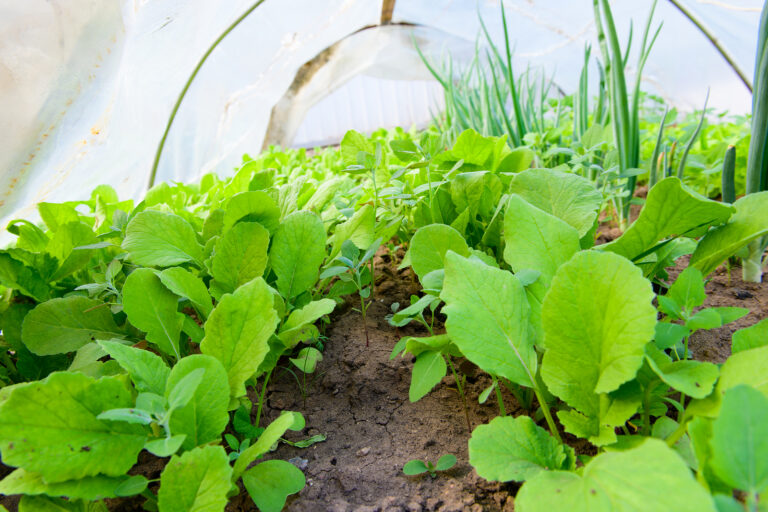
2. Low Tunnels
For extended cold or wind.
- Constructed with hoops and plastic or fabric.
- Provide a microclimate 5–10°F warmer.
- Essential for winter lettuce, cauliflower, or strong winter storms.
3. Mulch
Straw, leaves, or compost.
- Insulates the soil around roots.
- Prevents soil from freezing and helps retain moisture.
- Particularly useful for carrots, beets, turnips, leeks, and garlic.
4. Cold Frames
For intensive winter growing.
- Great for lettuce, spinach, and herbs.
- Allows near-continuous harvests even in deep winter.
Best Planting Timing by Month (Typical Mild-Winter Climate)
(Adjust earlier for colder zones)
July–August
- Brussels sprouts
- Cabbage
- Early broccoli
- Overwintering varieties
August–September
- Kale
- Chard
- Beets
- Carrots
- Radishes (winter types)
- Broccoli
- Cauliflower
- Leeks
September–October
- Spinach
- Lettuce (winter-hardy)
- Turnips
- Scallions
- Fava beans
- Overwintering onions
October–November
- Garlic
- Bulbing onions (short-day types)
Final Thoughts
A winter garden is really a fall-planted garden. Once plants are established before the first frost, they grow slowly through winter but stay vibrant, productive, and flavorful. With simple protection—row covers, tunnels, mulch—you can harvest your own fresh vegetables for months.