August Vegetable Garden Tasks: Managing Heat and Preparing for Fall

August is often the toughest month in the vegetable garden. Heat stress, dry soil, and tired plants are common, yet this is also peak harvest season. The goal now is to protect soil, keep productive plants going, and prepare beds for the coming transition to fall.
1. Prioritize Consistent Watering
August heat demands steady moisture.
- Water deeply and regularly to prevent stress
- Check soil moisture daily during heat waves
- Avoid shallow, frequent watering
Consistency now prevents blossom end rot and bitterness.
2. Maintain and Rebuild Mulch
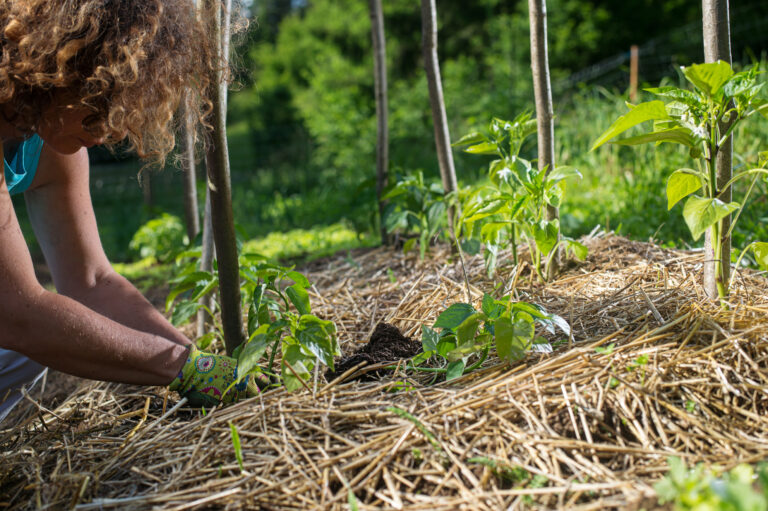
Mulch is essential in late summer.
- Replace broken-down mulch to maintain coverage
- Use compost, straw, or leaf mold
- Keep soil shaded and biologically active
Healthy soil buffers plants from extreme temperatures.
3. Support Heavy, Mature Plants
Late-summer growth can overwhelm supports.
- Reinforce tomato cages and stakes
- Tie up heavy branches and fruiting vines
- Prevent breakage from wind or weight
Good support protects weeks of future harvest.
4. Remove Spent and Diseased Plants
Not every plant will make it through summer.
- Pull finished spring or failing summer crops
- Remove diseased plants promptly
- Clear beds to reduce pest and disease pressure
Clean beds are easier to transition into fall.
5. Continue Feeding Fruiting Crops
Plants are still producing heavily.
- Side-dress tomatoes, peppers, and squash with compost
- Avoid high-nitrogen feeds late in the season
- Support fruit ripening rather than new leafy growth
Balanced nutrition extends productivity.
6. Harvest Often and Completely
Frequent harvest keeps plants productive.
- Pick fruits before they become oversized or overripe
- Harvest early mornings for best quality
- Preserve or process surplus quickly
Regular harvesting prevents plant exhaustion.
7. Monitor for Late-Season Pests
Heat favors pests.
- Watch for mites, aphids, and caterpillars
- Hose off pests early in the day when needed
- Encourage beneficial insects
Late-season problems can escalate quickly.
8. Prepare Beds for Fall Crops
August is a transition month.
- Refresh soil with compost where crops are removed
- Lightly cultivate or top-dress beds
- Plan spacing and succession timing
Preparation now makes fall planting smoother and more successful.