Stephen Albert

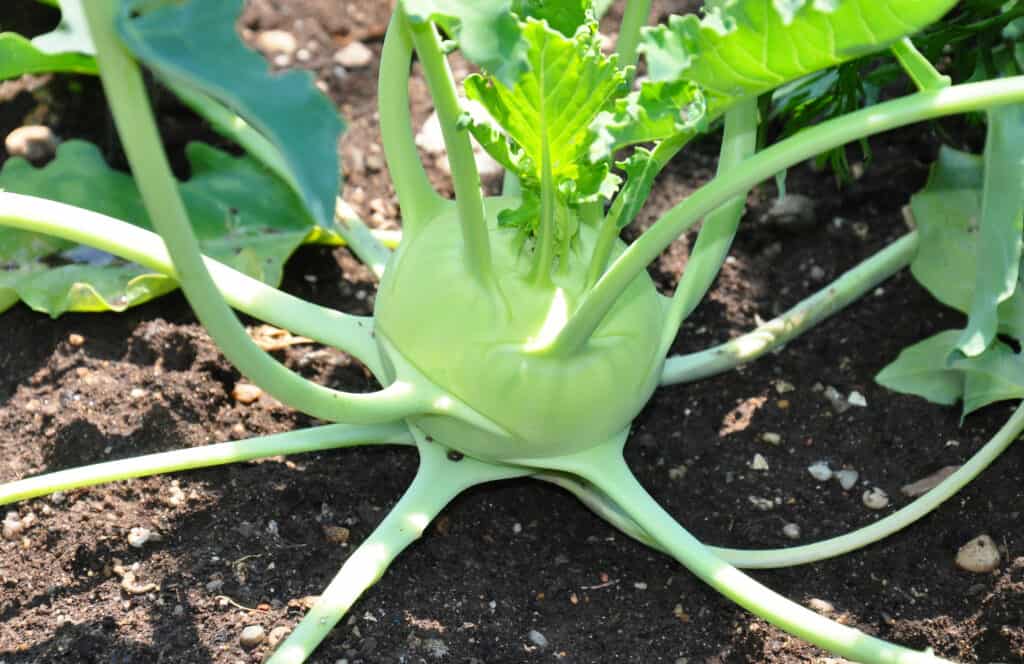
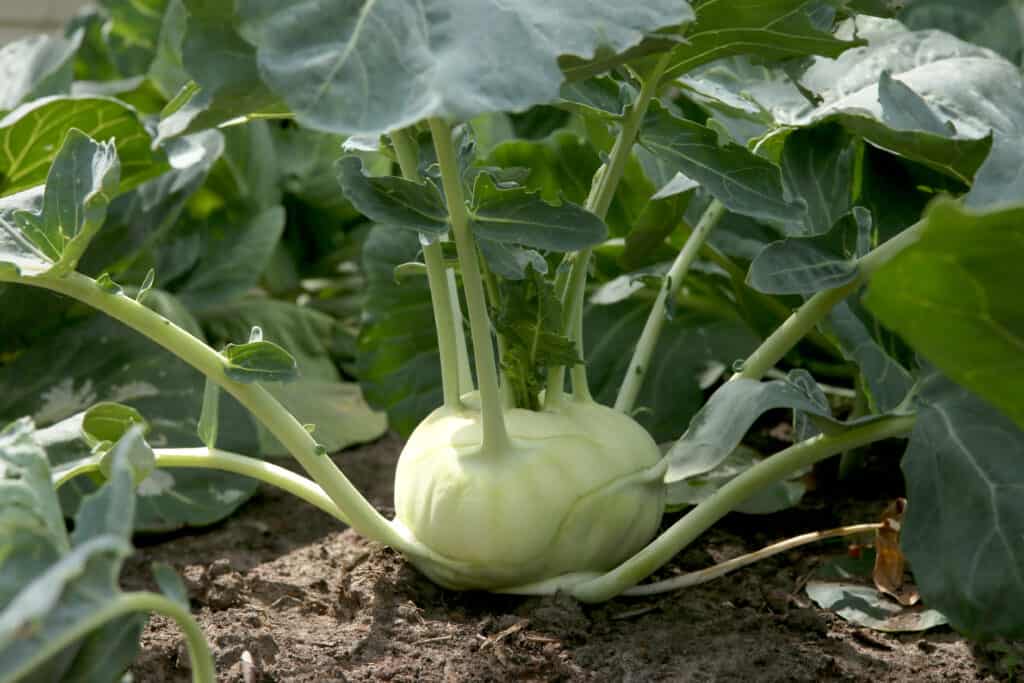
Kohlrabi is grown for its swollen base which is actually the plant’s stem. The globe-shaped base develops above the ground. Kohlrabi is a good choice for gardens that don’t have deep soils. Kohlrabi is a hardy biennial grown as an annual. Both the globe base and leaves can be eaten.
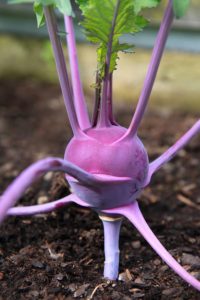
Kohlrabi is a hardy biennial grown as an annual. Kohlrabi has a swollen globe-shaped stem that makes it look like a turnip growing on a cabbage root. Stems can be white, purple, or green and are topped with a rosette of long-stemmed blue-green leaves. Kohlrabi is milder and sweeter than either cabbage or turnip.
Related articles:
- Ten Ways to Cook and Serve Kohlrabi
- Kohlrabi Seed Starting Tips
- How to Harvest and Store Kohlrabi
- Kohlrabi Growing Problem Troubleshooting
- How to Plant and Grow Kohlrabi
Here is your complete guide to growing kohlrabi!
Kohlrabi quick growing tips
- Sow kohlrabi seed in the garden 3 to 4 weeks before the last average frost date in spring.
- Kohlrabi grows best in cool temperatures between 40°F and 75°F (4.4°C and 23.9°C).
- Kohlrabi requires 45 to 60 days to reach maturity. In warm winter regions, sow kohlrabi in late summer for winter harvest.
- Kohlrabi can withstand an early autumn frost.
- Kohlrabi yield: plant 4 to 5 kohlrabi per household member.
Where to plant kohlrabi
- Plant kohlrabi in full sun.
- Grow kohlrabi in well-worked, well-drained soil rich in organic matter.
- Work 2 inches (5cm) of aged compost into the soil before you begin planting.
- Kohlrabi prefers soil within the 5.5 to 6.8 range. Side-dress kohlrabi with aged compost at midseason.
- Indoor starting: Kohlrabi seeds can be started indoors or in a cold frame or plastic tunnel.
When to plant kohlrabi
- Spring planting time: Kohlrabi is a cool-weather crop. Sow kohlrabi seed in the garden 3 to 4 weeks before the last average frost date in spring. Kohlrabi requires 45 to 60 days to reach maturity and should be grown so that it comes to harvest before temperatures average greater than 75°F (23.9°C). Grow kohlrabi for fall harvest in hot-summer regions.
- Planting for fall or winter harvest: In warm winter regions, you can grow kohlrabi through the winter. Sow kohlrabi in late summer for winter harvest. Kohlrabi can withstand an early autumn frost. In cold winter regions, sow kohlrabi in summer for early autumn harvest.
- Succession crops: You can sow kohlrabi seeds as long as temperatures are greater than 40°F (4.5°C).
Kohlrabi cold-weather care
- If you are growing kohlrabi for late fall or winter harvest, protect plants with row covers or a plastic tunnel if nighttime temperatures below 25°F (-4°C) are predicted.
More tips at Kohlrabi Seed Starting Tips.
Planting and spacing kohlrabi
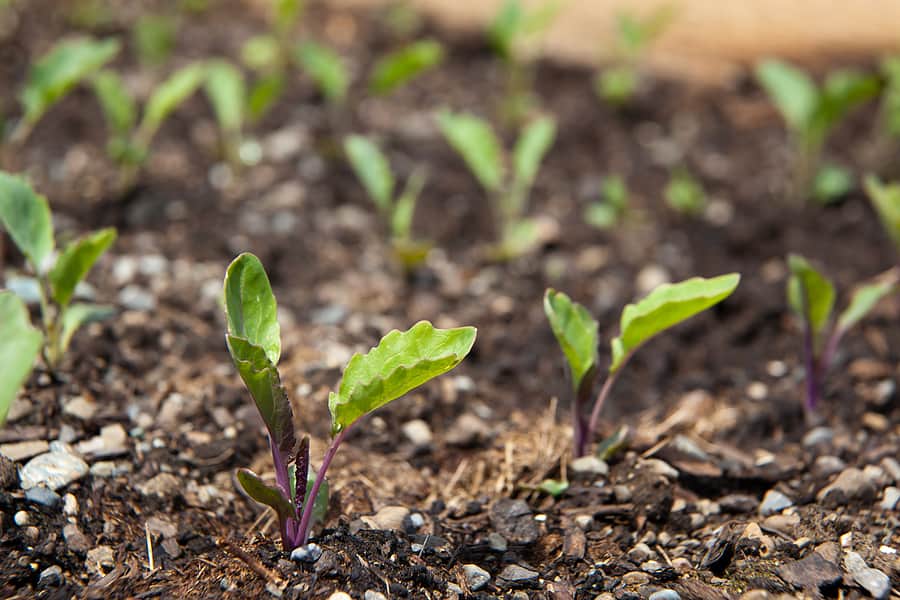
- Sow kohlrabi seed ½ inch deep and 1 inch (2.5 cm) apart; thin successful seedlings from 5 to 8 inches (12-20cm) apart.
- Space rows 18 to 24 inches (45-60 cm) apart.
- Thinned seedlings can be transplanted to another part of the garden.
- Intensive spacing: Sow seed or set out transplants 4 to 6 inches (10-15cm) apart in a staggered double row.
How much to grow: Grow 6 to 10 plants per person.
Kohlrabi companion plants
- Grow kohlrabi with beets, celery, herbs, onions, and potatoes.
- Do not plant with pole beans, strawberries, or tomatoes.
Container growing kohlrabi
- Kohlrabi is large-rooted and not well suited for container growing.
Waterg and feeding kohlrabi
- Keep soil evenly moist for quick growth. Kohlrabi that goes without water will become woody.
- Prepare planting beds with aged compost.
- Side-dress kohlrabi with aged compost once a month. Alternatively, you can fee kohlrabi once a month with a plant-starter fertilizer or a balanced organic fertilizer.
Kohlrabi care
- Cultivate carefully to avoid harming the shallow roots.
- Mulch kohlrabi with aged compost when plants are 4 to 5 inches (10-12 cm) tall.
Kohlrabi pests
- Kohlrabi can be attacked by cutworms, cabbage loopers, and imported cabbage worms.
- Place collars around stems to protect seedlings from cutworm damage. Remove egg clusters from underneath leaves and wash plants with a diluted soap solution.
- Cabbage worms can be controlled by spraying with Bacillus thuringiensis.
Kohlrabi diseases
- Kohlrabi is susceptible to cabbage yellows, clubroot, and downy mildew.
- Plant disease-resistant varieties.
- Remove and destroy infected plants.
Harvesting kohlrabi
- Kohlrabi is ready for harvest when stem globes reach 2 to 3 inches (5-7cm) in diameter.
- Globes that grow larger than 3 inches (7.5cm) in diameter may become woody.
- Kohlrabi leaves can be harvested for the table; cook them like you would other greens.
- If the skin of a globe is tough, peel away the outer layer; the center may still be tender and flavorful.
- Winter harvest. In mild-winter regions, leave kohlrabi in the ground over the winter and harvest globes as needed.
More tips at How to Harvest and Store Kohlrabi.
Storing and preserving kohlrabi
- Kohlrabi will store well in the refrigerator for 1 to 2 weeks or for one to two months in a cold, moist place.
- Kohlrabi can be peeled and diced for freezing.
Kohlrabi varieties to grow
- Varieties: ‘Early Purple Vienna’ (60 days); ‘Early White Vienna’ (55 days); ‘Grand Duke’ (50 days); ‘Purple Danube’ (52 days); ‘Kolibri’ (50 days).
- ‘Early White Vienna’ produces compact plants; light green skin and white flesh globes; this variety is slow to bolt; grow from seed in 50 to 55 days.
- ‘Grand Duke’ produces green-skinned globes to 4 inches (10cm) in diameter; grow from seed in 48 to 50 days.
- ‘Kolibri’ produces purple globes with white flesh; it can tolerate heat; grow from seed in 50 days.
About kohlrabi
- Common name. Kohlrabi, turnip-rooted cabbage, stem turnip, turnip cabbage, German turnip
- Botanical name. Brassica oleracea, Gongylodes group
- Origin. Hybrid
Kohlrabi articles at Harvest to Table:
How to Plant and Grow Kohlrabi
How to Harvest and Store Kohlrabi
Turnip, Rutabaga, and Kohlrabi Growing Problem Troubleshooting
Ten Ways to Cook and Serve Kohlrabi
Garden Planning Books at Amazon:
- Vegetable Garden Almanac & Planner
- Kitchen Garden Grower’s Guide Vegetable Encyclopedia
- Vegetable Garden Grower’s Guide
- Tomato Grower’s Answer Book
Grow 80 vegetables: KITCHEN GARDEN GROWERS’ GUIDE
More how to grow articles:
Learn how to plant, grow, and harvest your favorite vegetables. Click below for all you need to know.
- Artichoke
- Arugula
- Asparagus
- Beans, Snap
- Beets
- Broad Beans
- Broccoli
- Brussels Sprouts
- Cabbage
- Cantaloupe — Melons
- Cardoon
- Carrots
- Cauliflower
- Celeriac
- Celery
- Chard
- Chayote Squash
- Chickpeas
- Chicory
- Chinese Cabbage
- Collards
- Corn Salad
- Corn, Sweet
- Cresses
- Cucumbers
- Eggplant
- Endive and Escarole
- Fava Beans
- Florence Fennel
- Garbanzo Beans
- Garlic
- Horseradish
- Jerusalem Artichoke
- Kale
- Kohlrabi
- Leeks
- Lettuce
- Lima Beans
- Melons
- Mizuna
- Mustard Greens
- New Zealand Spinach
- Okra
- Onions
- Parsnips
- Peanuts
- Peas
- Peppers
- Potatoes
- Pumpkins
- Radicchio
- Radishes
- Rhubarb
- Rutabaga
- Salsify
- Shallots
- Sorrel
- Southern Peas
- Soybeans
- Spinach
- Squash, Summer
- Squash, Winter
- Sunchokes
- Sweet Potato
- Swiss Chard
- Taro
- Tomatillo
- Tomatoes
- Turnips
- Watermelon
- Zucchini