Stephen Albert

Mustard is a cool-season crop. Mustard matures in 30 to 50 days so time the planting for harvest when the average temperature is around 60° to 65°F (16°-18°C).
Mustard bolts easily so it is often grown for autumn harvest, but it can be grown as a spring crop where spring weather tends to stay cool.
Sow mustard seeds in the garden 2 to 4 weeks before the last frost. Start transplants indoors 4 to 6 weeks before setting them out in the garden. Transplants can be set in the garden from 5 weeks before to 2 weeks after the last frost.
Related articles:
Make succession plantings every 10 to 14 days in spring until the temperatures begin to rise.
Sow mustard for a fall harvest 8 weeks before the first expected fall frost.
Mustard tolerates many kinds of soil but grows best in moist, humus-rich soil. Mustard can tolerate partial shade. Mulch to keep the soil cool and moist to prevent bolting.
Mustard leaves about 4 to 5 inches (10-13cm) long have the best flavor. Begin harvesting outer leaves cut-and-come again to prolong the harvest time. The flavor is improved by a mild frost
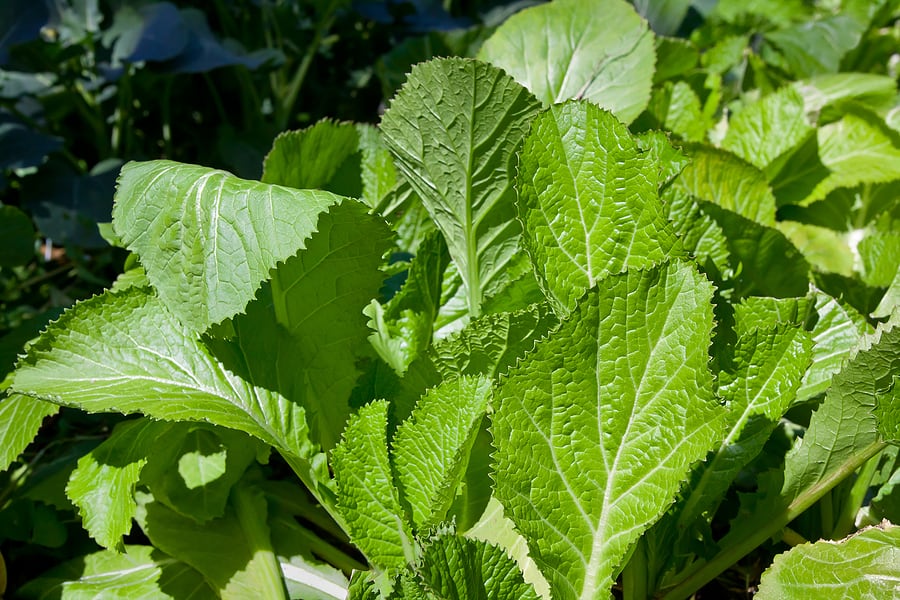
Mustard greens are a cool-season leaf crop. Mustard is a hardy leaf vegetable with a rosette of large light or dark green curly leaves that grow to 3 feet (.9m) tall. Leaves and leaf stalks are eaten and have a peppery flavor. The seeds can be ground and used as a condiment.
Mustard planting details
- Sowing depth: ¼ inch (.6 cm)
- Space between plants after thinning: 6-9 inches (15-23cm)
- Days to sprout: 5-10
- Days to harvest: 30-50
- Storage period: 1-2 weeks
- Seeds per 100-row feet: ¼ ounce (7 grams)
- Yield per 100-row feet: 100 heads
- Suggested varieties: Florida Broad Leaf (bolt resistant), Green Wave (bolt resistant), Southern Giant Curled (good choice for a fall crop)
Here is your complete guide to growing mustard greens!
Mustard greens growing quick tips
- Sow mustard greens as early as 4 to 6 weeks before the average last frost date in spring.
- Sow succession crops every 4 to 6 weeks.
- Mustard greens require 30 to 40 days to reach harvest.
- Plant crops so that they come to harvest before temperatures average greater than 75°F (24°C).
- Sow mustard greens in autumn or early winter in mild winter regions.
- Mustard greens yield: Plant 6 to 10 mustard plants per household member.
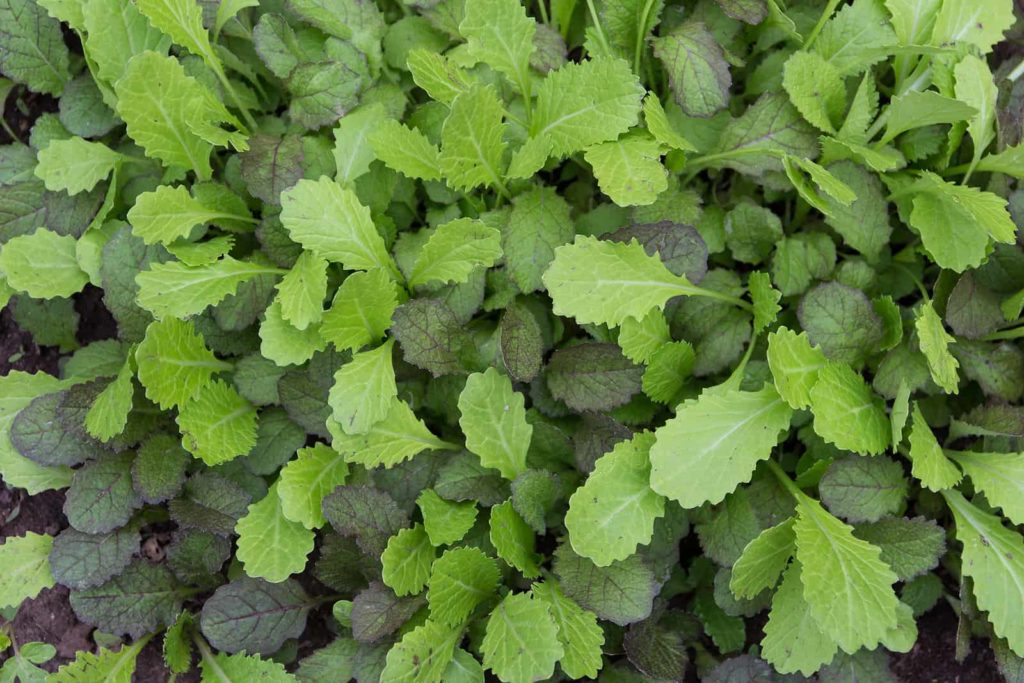
Where to plant mustard greens
- Grow mustard greens in full sun or partial shade.
- Plant mustard in well-worked, well-drained soil rich in organic matter.
- Add aged compost to planting beds before planting.
- Mustard prefers a soil pH of 5.5 to 6.8.
Mustard greens planting time
- Sow mustard as early as 4 to 6 weeks before the average last frost date in spring.
- Sow succession crops every 4 to 6 weeks.
- Mustard requires 30 to 40 days to reach harvest.
- Plant mustard greens so that they come to harvest before temperatures average greater than 75°F (24°C).
- Sow mustard in autumn or early winter in mild winter regions.
- Seeds may be slow to germinate if the soil is too cool, 40°F (4.4°C) or less.
- Mustard grown in hot weather or long days will bolt and go to seed.
Good Products at Amazon for Seed Starting Success:
- Jump Start Germination Station w/Heat Mat Tray, 72-Cell Pack, Dome
- Espoma Seed Starting Mix
- 200 Count- Jiffy 7 Peat Soil Seed Starting Plugs
- Seed Starter Kit with Humidity Dome (120 Cells Total Tray)
- AgrobriteT5 Fluorescent, 2-Foot, Grow Light System
(These dates are for the Northern Hemisphere)
| The average date of the last frost | Planting dates |
| Jan. 30 | Jan. 1-Feb. 10 |
| Feb. 8 | Jan. 10-Mar. 1 |
| Feb. 18 | Jan. 15-Feb. 15 |
| Feb. 28 | Feb. 1-Mar. 15 |
| Mar. 10 | Feb. 10-Mar. 20 |
| Mar. 20 | Feb. 20-Apr. 1 |
| Mar. 30 | Mar. 10-Apr. 15 |
| Apr. 10 | Mar. 1-Apr. 20 |
| Apr. 20 | Mar. 20-May 1 |
| Apr. 30 | Apr. 1-May 10 |
| May 10 | Apr. 15-June 1 |
| May 20 | May 1-June 30 |
| May 30 | May 10-June 30 |
| June 10 | May 20-June 30 |
Planting and spacing mustard greens
- Sow mustard seed ½ inch (12mm) deep.
- When seedlings are large enough to handle thin them from 4 to 8 inches (10-20cm) apart.
- Space rows 12 to 24 inches a(30-61cm) part.
Mustard greens companion plants
- Plant mustard greens with other leafy greens, English peas, and snap peas.
Container growing mustard greens
- Mustard can easily be grown in a container.
- Broadcast seeds over the soil surface and cover lightly with soil. Thinnings can be eaten.
Good Products at Amazon for Raised Bed Growing
- Galvanized Raised Bed 8×3
- Cedar Raised Bed 4×8
- Elevated Cedar Planter 4×2
- Walk-In Greenhouse Tunnel 15x7x7
- Row Cover for Freeze Protection 10×30
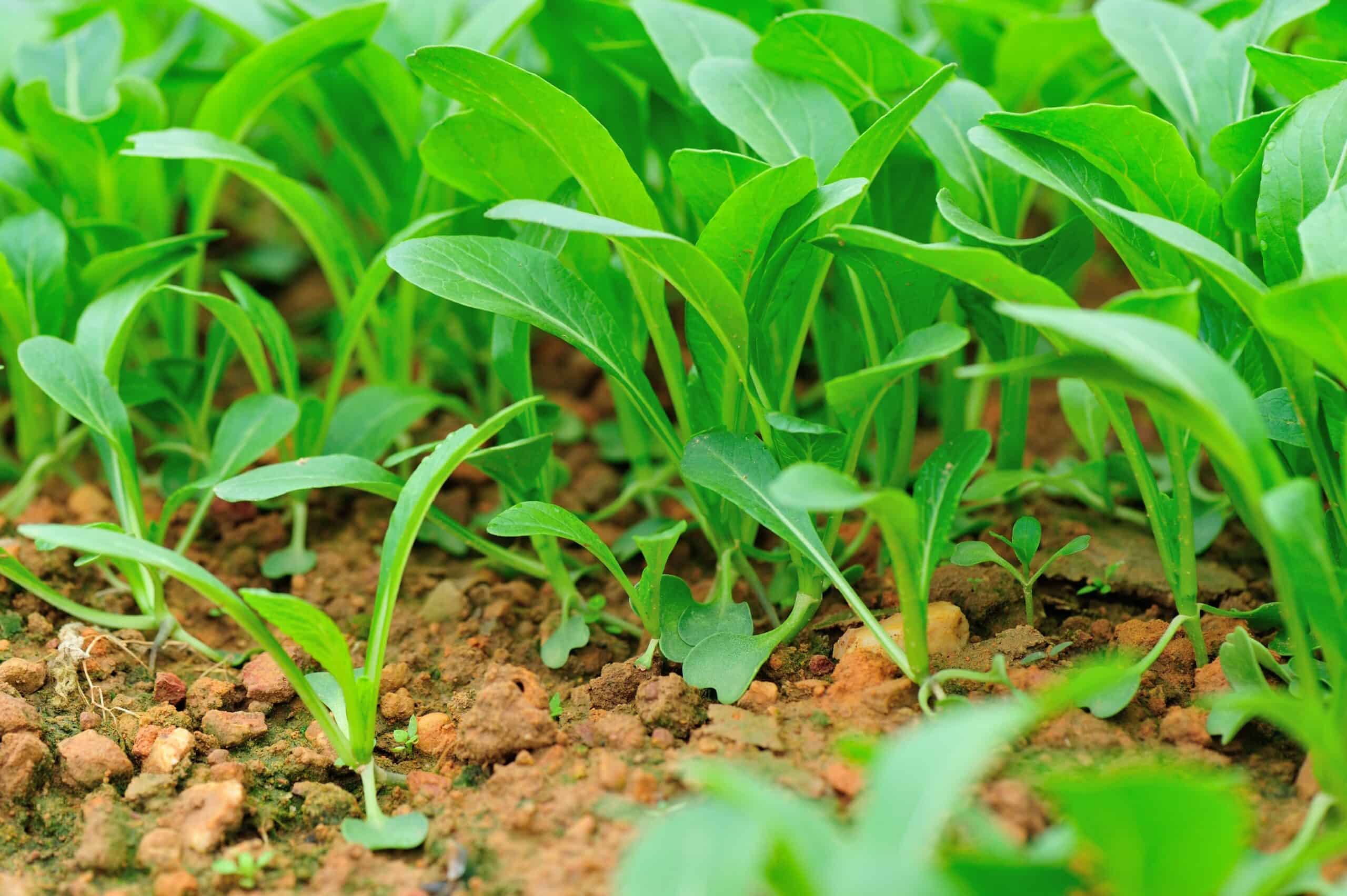
Watering and feeding mustard greens
- Keep soil evenly moist to keep mustard leaves growing quickly. Do not allow the soil to dry out.
- Add aged compost to planting beds before sowing.
- Side-dress mustard plants with aged compost at midseason.
Mustard greens care
- Keep planting beds weed-free.
- Pull mustard from the garden as soon as it goes to seed to avoid prolific self-seeding.
Good Products at Amazon For Growing Mustard Greens and Cabbage Family Crops:
- Neem Bliss 100% Cold Pressed Neem Oil
- Monterey BT Caterpillar Killer
- Safer Brand Insect Killing Soap
- PyGanic Botanical Insecticide
- Captain Jack’s Dead Bug Brew
- Live Ladybugs
- Natures Good Guys Beneficial Nematodes
- Yellow Sticky Traps
- Southern Ag Liquid Copper Fungicide
- MycoStop Biofungicide
Mustard greens pests and diseases
- Mustard can be attacked by flea beetles and aphids. Wash these pests away with a blast of water.
- Mustard is susceptible to white rust. Remove leaves that have white rust.
- To avoid diseases, water plants at the base of the stem keeping moisture off the leaves.
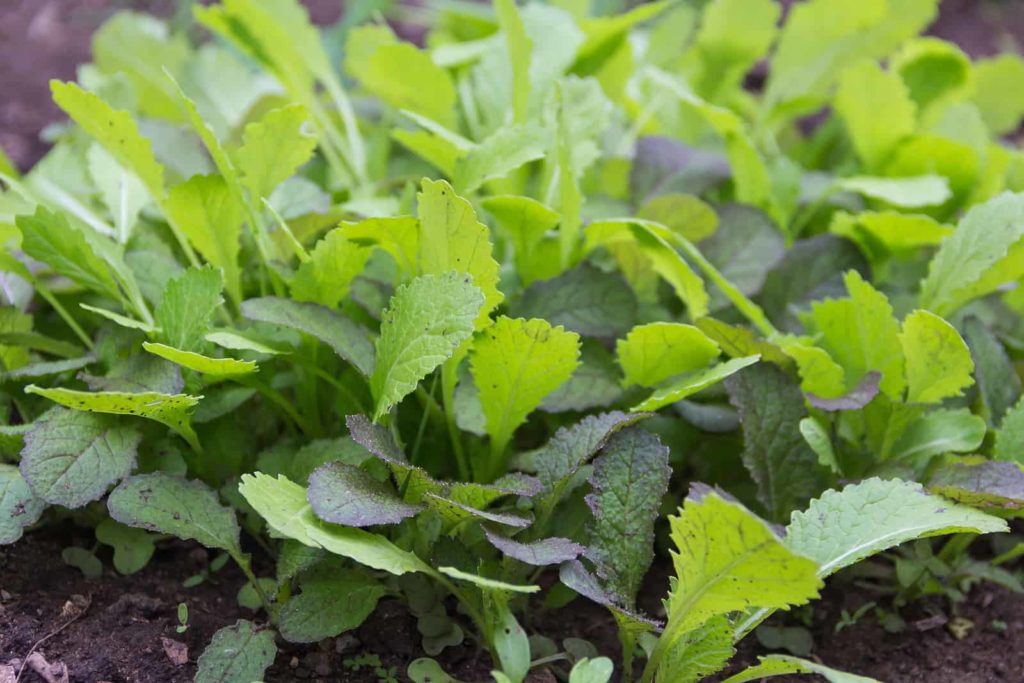
Harvesting mustard greens
- Pick individual leaves when they are young and tender, 3 to 4 inches (7-10cm) long, or cut and use the entire plant.
- Complete the harvest before the weather grows hot; hot weather will cause leaves to become tough and strong flavored.
- Complete the harvest before the plant goes to seed.
Storing and preserving mustard greens
- Mustard will keep in the vegetable compartment of the refrigerator for 2 to 3 weeks.
- Mustard leaves can be frozen or dried. Mustard seeds can be sprouted.
Mustard varieties to grow
- Curled Leaf: ‘Fordhook Fancy’ (40 days); ‘Red Giant’ (23 days); ‘Green Wave’ (45 days); ‘Southern Giant Curled’ (40 days).
- Plain Leaf: ‘Florida Broad Leaf’ (43-50 days); ‘Tendergreen’ (34-40 days).
- Oriental Mustard Cabbage-green stalks: ‘Chinese Pac Choi’ (60 days); ‘Choi Sum’ (60 days); ‘Dai Gai Choy’ (65 days).
- Oriental Mustard Cabbage-white stalks: ‘Bok Choi’ (45-60 days); ‘Chinese Flat Cabbage’ (40 days); ‘Green-In-Snow’ (45 days); ‘Joi-Choi’ (45-50 days).
About mustard greens
- Common name. Mustard, Chinese mustard, leaf mustard, spinach greens
- Botanical name. Brassica juncea
- Origin. Asia
Mustard articles at Harvest to Table:
How to Plant, Grow, and Harvest Mustard Greens
Six Ways to Cook and Serve Mustard Greens
Garden Planning Books at Amazon:
- Vegetable Garden Almanac & Planner
- Kitchen Garden Grower’s Guide Vegetable Encyclopedia
- Vegetable Garden Grower’s Guide
- Tomato Grower’s Answer Book
Grow 80 vegetables: KITCHEN GARDEN GROWERS’ GUIDE
More how to grow articles:
Learn how to plant, grow, and harvest your favorite vegetables. Click below for all you need to know.
- Artichoke
- Arugula
- Asparagus
- Beans, Snap
- Beets
- Broad Beans
- Broccoli
- Brussels Sprouts
- Cabbage
- Cantaloupe — Melons
- Cardoon
- Carrots
- Cauliflower
- Celeriac
- Celery
- Chard
- Chayote Squash
- Chickpeas
- Chicory
- Chinese Cabbage
- Collards
- Corn Salad
- Corn, Sweet
- Cresses
- Cucumbers
- Eggplant
- Endive and Escarole
- Fava Beans
- Florence Fennel
- Garbanzo Beans
- Garlic
- Horseradish
- Jerusalem Artichoke
- Kale
- Kohlrabi
- Leeks
- Lettuce
- Lima Beans
- Melons
- Mizuna
- Mustard Greens
- New Zealand Spinach
- Okra
- Onions
- Parsnips
- Peanuts
- Peas
- Peppers
- Potatoes
- Pumpkins
- Radicchio
- Radishes
- Rhubarb
- Rutabaga
- Salsify
- Shallots
- Sorrel
- Southern Peas
- Soybeans
- Spinach
- Squash, Summer
- Squash, Winter
- Sunchokes
- Sweet Potato
- Swiss Chard
- Taro
- Tomatillo
- Tomatoes
- Turnips
- Watermelon
- Zucchini