Stephen Albert

Yard-long beans can be eaten raw or cooked. Sliced yard-long beans can be added raw to salads similar to French haricots verts. Yard-long beans can be steamed or sautéed as a side dish. They can be added to soups and stews.
Yard-long beans have a chewy, crunchy texture–more so than snap beans–and a flavor reminiscent of the dry navy bean or asparagus.
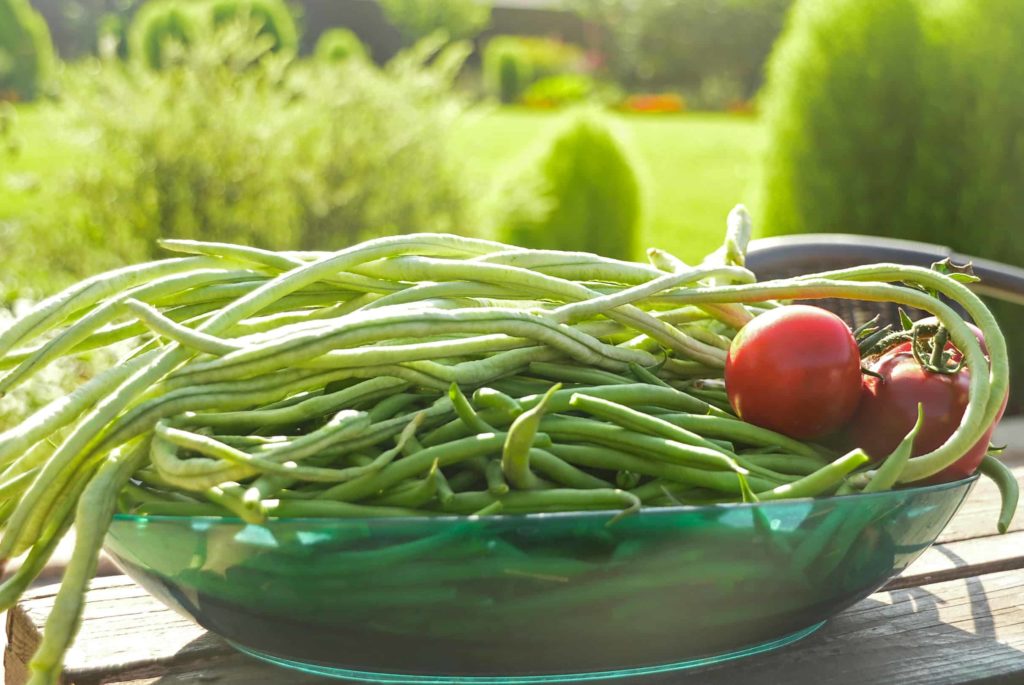
Yard-long beans are also called asparagus beans, yard-long beans, Chinese peas, snake beans, dau gok, and bodi or boonchi.
Yard-long beans are warm-season plants harvested from mid to late summer. Long beans will be damaged by frost.
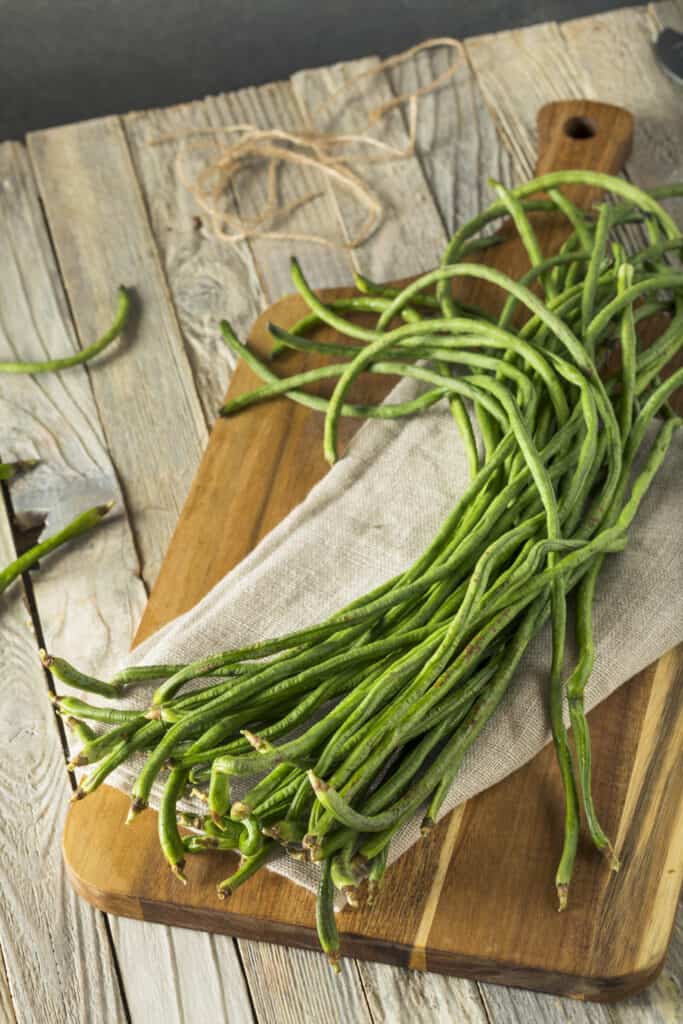
How to select yard-long beans
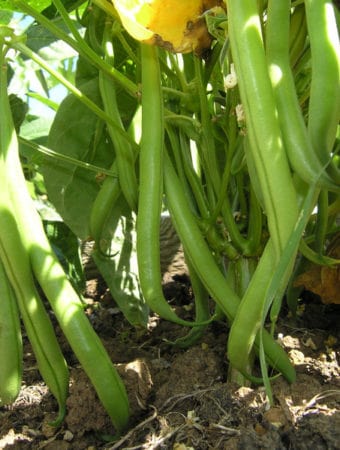
- Yard-long beans are most flavorful thin and about 18 inches long. (Long beans referred to as yard-long beans will never reach a yard long.)
- Seeds inside a long bean should not be fully developed; avoid beans that are bulging.
- Yard-long beans are dense and meaty; they are not crisp or juicy like green beans, and they are not a substitute for green beans).
- Avoid mature yard-long beans that are yellow or whitish-colored.
- Avoid yard-long beans that are limp.
- There are both pale green and dark green yard-long beans. A paler bean will be sweeter tasting and meatier than dark green long beans. Pale green long beans will be more tender than dark green yard-long beans. Dark green long beans will be stronger flavored and firmer than pale green long beans.
- Mature yard-long beans can be harvested for their seeds which can be dried and stored like other dry beans.
- Beans that have grown too old will turn limp and rusty colored.
- Yard-long beans do not contain as much moisture as bush or pole beans (the long bean is not a close relative of the common bean), that’s what makes them more flexible and snake-like, and drier to taste.
How to store yard-long beans
- Yard-long beans will keep in the refrigerator for 2 to 3 days in a closed plastic bag.
- Wrap yard-long beans in a paper towel and placed them in a plastic bag.
How to prep yard-long beans
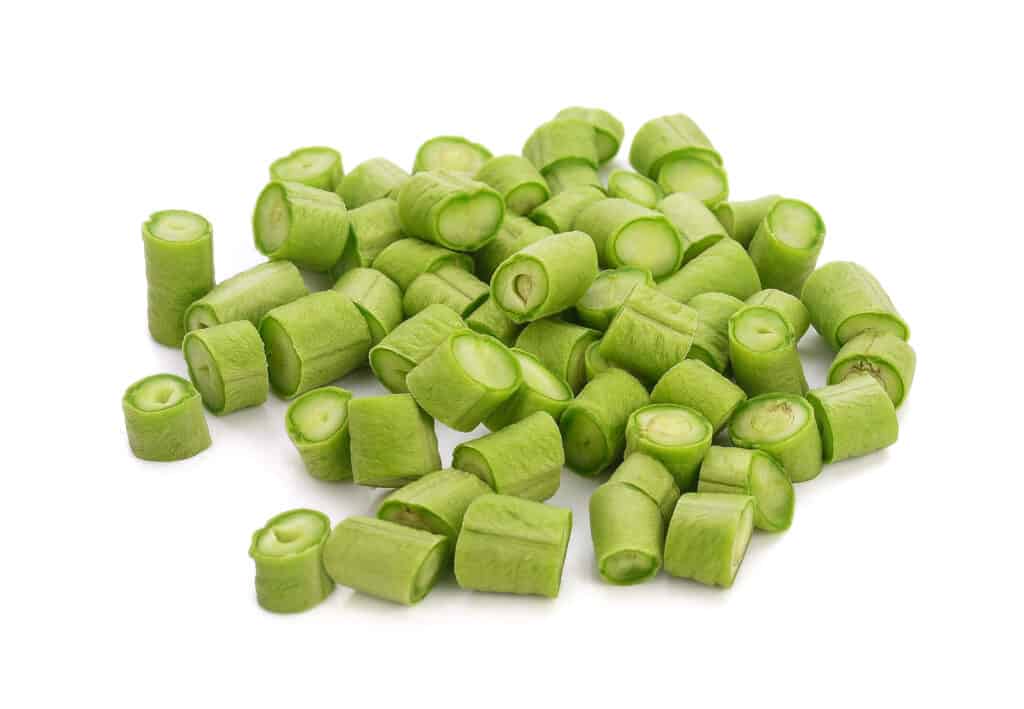
- Trim away both ends then slice the bean into desired lengths on the diagonal or straight across.
- Slice yard-long beans into 1 to 2-inch bite-sized pieces for stir-frying.
- Yard-long beans are best trimmed before cooking.
Yard-long bean cooking suggestions
- Yard-long beans can be stir-fried, stewed, braised, sautéed, shallow-fried, and deep-fried.
- Yard-long bean flavor intensifies with cooking.
- Stir-fry yard-long beans until just tender and crunchy.
- Steam yard-long beans until just tender about 3 to 7 minutes.
- Braise yard-long beans for 20 minutes with other vegetables and meats, best in a garlicky or oniony braising liquid. Dark green long beans are best suited for braising.
- The taste of yard-long beans intensifies with cooking; they become nutty, chewy, and firm.
Yard-long bean serving suggestions
- Long beans can be served raw in salads.
- Serve long beans with vegetable or meat stews, fried rice, black beans, sausage, roast pork, curry, or chili sauce.
- Add long beans to soups or stir-fried dishes.
- Long beans are often used in Szechwan-style Chinese cooking. The Szechwan dish called dry-fried beans is the long bean deep-fried, drained, and then stir-fried with a spicy seasoning. That dish takes about 5 minutes to cook.
Yard-long beans flavor partners
- Yard-long beans have a flavor affinity for pork, ginger, nuts, fermented black beans, garlic, strong herbs, soy and fish sauce, chili peppers, sausages, oil, and vinegar.
Yard-long bean nutrition
- Yard-long beans are rich in vitamin A and also contain vitamin C and potassium.
- Yard-long beans are low in calories, about 45 calories per cup.
Get to know yard-long beans
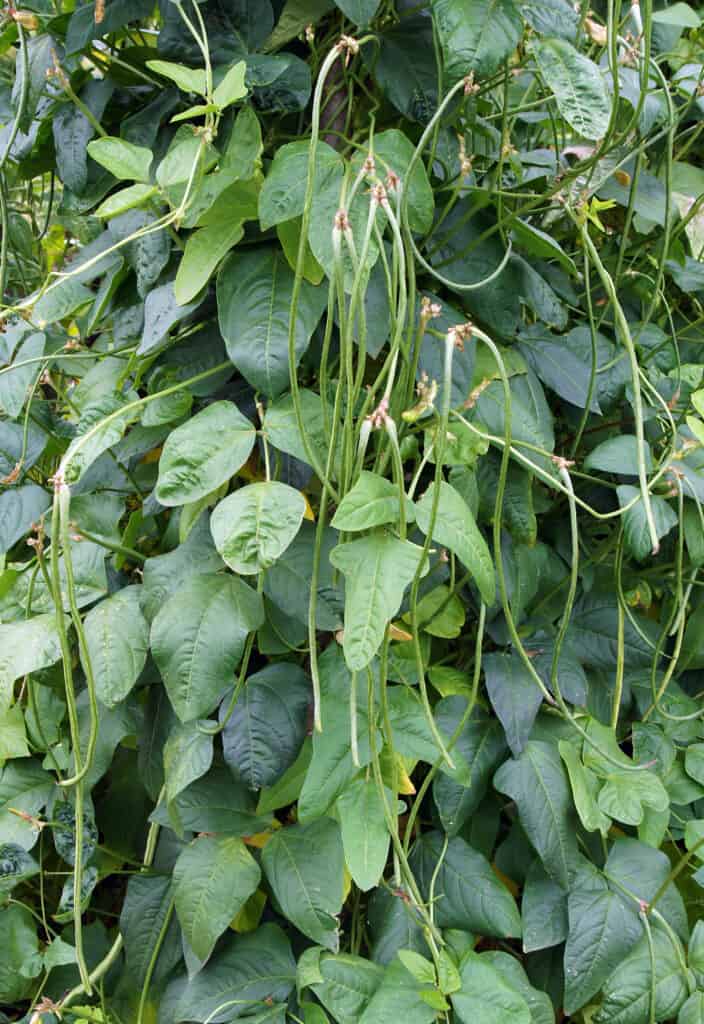
- Yard-long beans are climbing plants that reach 6 to 13 feet long.
- The pods can be straight or hooked. Each pod contains 15 to 20 elongated kidney-shaped seeds usually black or brown and each about ½ to ¾ inches long.
- Yard-long beans are ready for harvest at 8 to 10 inches long but can be picked much longer, at 1½ to 3 feet long.
- Yrd-long beans originated in tropical and sub-tropical Africa before traveling east to India, Indonesia, and China and then on to the Pacific Islands. From Africa, the long bean traveled west to the Caribbean and North America.
- Yard-long beans are commonly grown in California and Hawaii.
- Yard-long beans are also called Chinese long beans and asparagus beans.
The botanical name for the yard-long bean is Vigna unguiculata, subsp. sesquipedalis. (Sesquipedalis means foot and a half long in Latin.)
Related articles:
How to Plant and Grow Snap Beans
How to Harvest and Store Snap Beans
Bean Growing Problems: Troubleshooting
Five Ways to Quick Cook and Serve Snap Beans
How to Can Green Snap Beans for Beginners
Cooking and Serving Yard-Long Beans
How to Grow Plant, Grow, and Harvest Chickpeas and Garbanzo Beans
How to Cook and Serve Chickpeas
How to Plant and Grow Lima Beans
How to Plant, Grow, and Harvest Broad Beans and Fava Beans
Five Ways to Cook and Serve Fava Beans
All About Dried Beans – Growing and Cooking
Container Growing Beans – Plant, Grow, and Harvest Tips
Articles of interest:
Best Herbs for Container Growing
Garden Planning Books at Amazon:
- Vegetable Garden Almanac & Planner
- Kitchen Garden Grower’s Guide Vegetable Encyclopedia
- Vegetable Garden Grower’s Guide
- Tomato Grower’s Answer Book
More kitchen tips:
Bring your harvest to the table. Kitchen prep tips and easy recipes for the vegetables you grow. Click below for vegetable prep and recipes you can use now.
- Almonds
- Apples
- Apricot
- Aprium
- Artichoke
- Arugula
- Asparagus
- Avocado
- Bamboo Shoots
- Banana
- Basil
- Beans, Dried
- Beans. Long
- Beans, Shell
- Beans, Snap
- Beets
- Bitter Melon
- Blackberry
- Bok Choy
- Broccoli
- Broccoli Raab
- Brussels Sprouts
- Cabbage
- Cardoon
- Carrots
- Cauliflower
- Celeriac
- Celery
- Chard
- Chayote Squash
- Cherimoya
- Cherries
- Chestnut
- Chickpea
- Chinese Cabbage
- Chives
- Cilantro
- Citron
- Clementine
- Collards
- Coriander
- Corn, Sweet
- Corn, Baby
- Corn Salad, Mache
- Cranberry
- Cress
- Cucumber
- Daikon
- Dandelion
- Dill
- Eggplant
- Endive, Belgian
- Endive and Escarole
- Fava Beans
- Fig
- Florence Fennel
- Garlic
- Ginger
- Grapefruit
- Grapes
- Guava
- Horseradish
- Jerusalem Artichoke
- Jicama
- Jujube
- Kale
- Kiwifruit
- Kohlrabi
- Kumquat
- Leeks
- Lemongrass
- Lemons
- Lettuce
- Lime
- Mache (Corn Salad)
- Mandarin Orange
- Mango
- Maple Syrup
- Marjoram
- Melons
- Michihili
- Mint
- Mizuna
- Mushrooms
- Mushrooms, Cremini
- Mustard Greens
- Napa Cabbage
- Nectarine
- Okra
- Olives
- Olive oil
- Onions
- Oranges
- Oregano
- Parsley
- Parsley Root
- Parsnips
- Passion Fruit
- Pawpaw
- Peaches
- Pears
- Peas, Garden Snap
- Peas, Snow
- Pei Tsai
- Peppers, Chili
- Peppers, Sweet
- Persimmon
- Pineapple
- Pineapple Guava
- Plantain
- Plums
- Pluots
- Pomegranate
- Potatoes
- Prickly Pear
- Pumpkin
- Quince
- Radicchio
- Radishes
- Raspberries
- Rosemary
- Rhubarb
- Rutabaga
- Sage
- Salsify
- Sauerkraut
- Savory
- Shallots
- Sorrel
- Spinach
- Squash, Summer
- Squash, Winter
- Strawberries
- Sunchokes
- Sunflower
- Sweet Potato
- Swiss Chard
- Tangerine
- Taro
- Tarragon
- Thyme
- Tomatillo
- Tomato
- Turnip
- Turnip Greens
- Yams