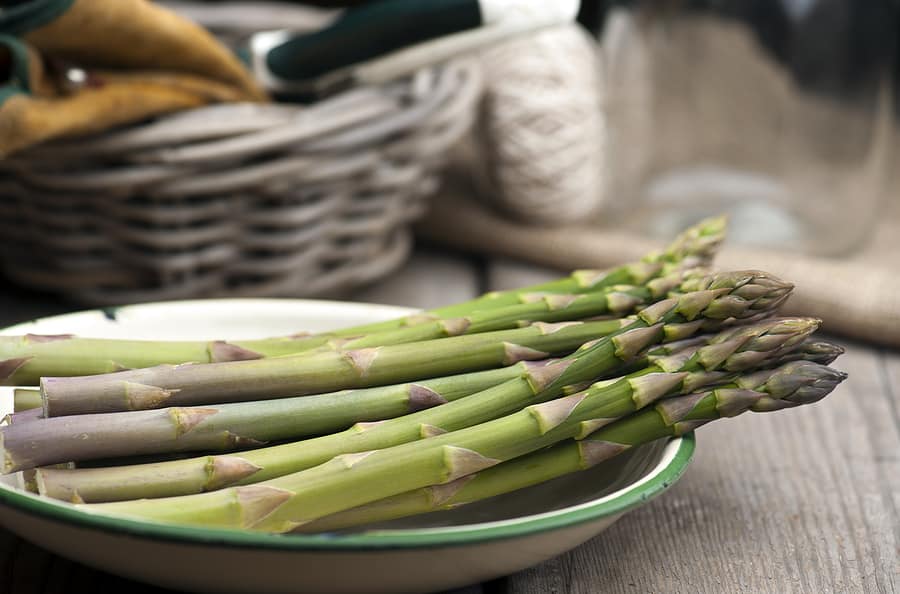
Seven Ways to Cook and Serve Asparagus

Fresh and quick, serve raw or cooked asparagus in salads or as a side dish during spring.
Cut fresh raw asparagus into one-inch lengths with kitchen scissors. Then add them to the greens salad to add a bit of substance. Choose firm, plump, straight, round asparagus spears with tips that are tight and compact. Give the asparagus bunch a squeeze; if it squeaks, it’s fresh.
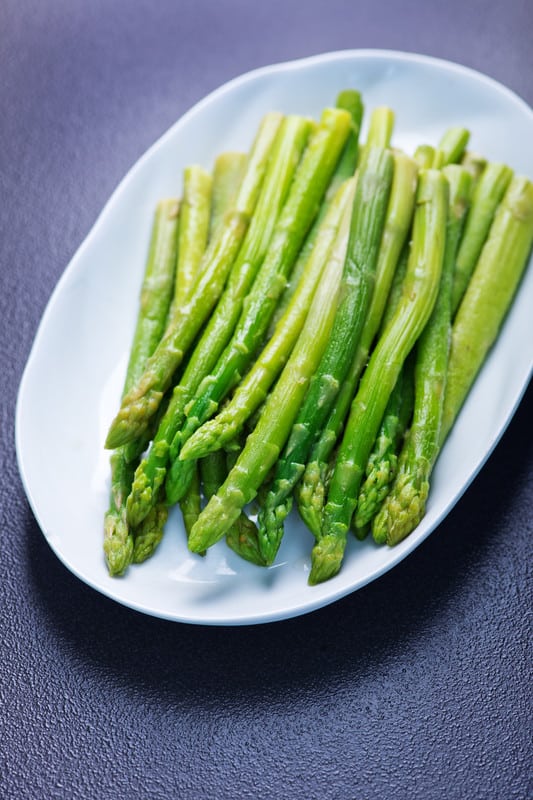
Steam asparagus for a side dish. Place the asparagus in a vegetable steamer over simmering water and steam, covered, until crunchy tender, about 5 minutes. Remove the asparagus and run it under cold water to stop further cooking. Place on a kitchen towel to drain.
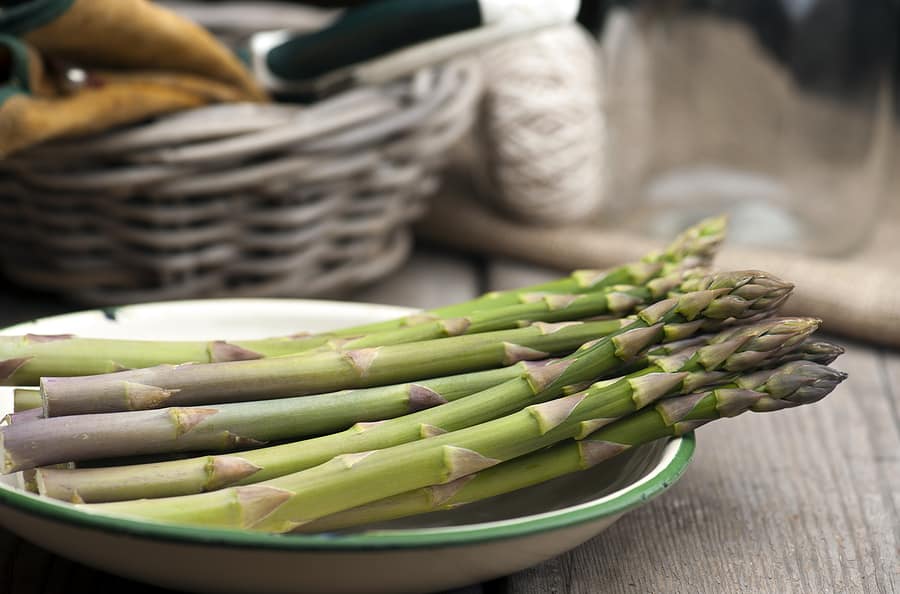
Asparagus plants produce young edible shoots—called “spears”–for about six weeks each spring just as the days begin to lengthen and winter fades. The season for asparagus is late winter through late spring—the season’s peak depends upon where you live.
How to select asparagus
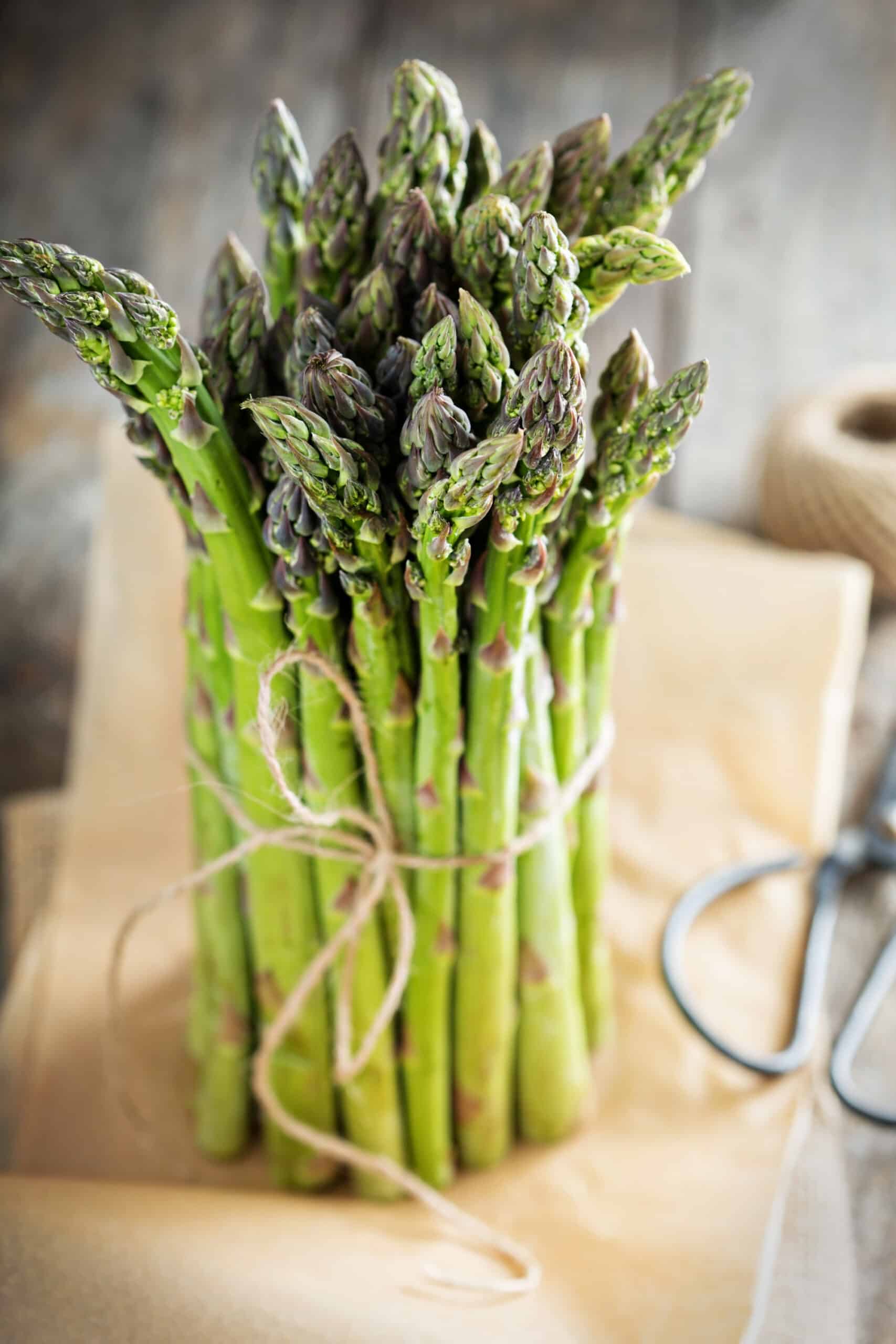
- Select asparagus with firm, plump, straight, round spears. The tips should be compact.
- Choose stalks that are about the same size and thickness—pencil-thin, standard or jumbo–for even cooking.
- The color should be strong for the variety: green, deep purple, or ivory white.
- The white, woody bottoms should be less than 15 percent of the total length.
- There should be no blemishes or bruises.
How to store asparagus
- Asparagus is best cooked fresh on the day of harvest.
- To store asparagus, cut off 1 inch (2.5 cm) from the bottom, wrap the fresh-cut area in a wet paper towel, place it in a plastic bag, and store it in the refrigerator crisper.
- Asparagus will keep for 2 to 3 days.
- To prolong storage, stand the cut-end down in 1 to 2 inches (2.5-5 cm) of water and place a plastic bag over the top. Change the water daily.
How to serve asparagus
- Asparagus can eat it raw, steamed, blanched, sautéd, stir-fried, baked, roasted, and grilled.
- Asparagus should be served “al dente” which means firm enough to bite into.
- The tips of asparagus are eaten with a fork, and the rest of the stem can be eaten with a fork and knife or your fingers.
- One early American cookbook suggested that asparagus be served with “oyl and vinegar.” That’s still great culinary advice.
Also of interest: Canning Asparagus
How to prep asparagus for cooking
- Wash asparagus just before cooking then break or cut off the stalk at its natural breaking point. An asparagus spear will break naturally and it becomes tough.
- Remove the skin of older or larger asparagus–which can be tough–with a vegetable peeler.
Also of interest: How to Cook Asparagus with No Recipe
How to shave asparagus
- Asparagus can be eaten raw. Shave the spears for serving. doesn’t have to
- To make perfect asparagus ribbons, use a Y-shaped vegetable peeler with a horizontal blade.
- Run the blade down the spear to make long, even-sized ribbons.
- The ribbons can be served on salads or atop other cooked vegetables.
How to steam asparagus on a stovetop
- The best way to steam asparagus is standing up with tender tips just above the water level.
- Trim and cut stem ends level, tie the spears together in a bundle, and place them in 1 inch (2.5 cm) of water in a tall, covered saucepan.
- Cover and cook for 5 to 10 minutes depending upon thickness until just tender. This way the bottoms are cooked and the tops are steamed.
- If you want to serve cooked asparagus cold, plunge the cooked spears into cold water to halt the cooking process, but do not let them soak.
How to Steam Asparagus in a Microwave
- Dampen 3 or 4 paper towels and place them on a microwaveable plate.
- Place rinsed and trimmed spears in a single layer on the towels.
- Season with 1/2 teaspoon kosher salt.
- Roll the paper towels and asparagus into a spiral bundle.
- Microwave on high for 3 minutes.
How to blanch asparagus
- To blanch asparagus horizontally, place the spears in 1 inch (2.5 cm) of water in a non-reactive skillet such as copper or aluminum (iron pots react to tannins in the asparagus and alter the color of the vegetable).
- Place the spears in just boiling water for 1 to 5 minutes and cook until tender-crisp; turn occasionally.
- Remove spears with a slotted spoon and place them in an ice bath or run them under cold water to set the color.
- The residual heat will continue to cook asparagus stalks for 30 to 60 seconds after they are removed from the heat.
- Pat dry. Be sure to thoroughly drain or dry cooked asparagus to remove excess moisture from the spear tips so as not to dilute a serving sauce.
How to sauté asparagus
- Cut thin spears into 2-inch pieces; large spears do not sear well.
- Use a cast-iron or stainless steel skillet that can safely heat until just smoking.
- Heat 1 tablespoon olive oil over medium-high heat.
- Add cut spears, and 1/4 teaspoon kosher salt, and cook.
- Stir until tender, 3 to 4 minutes for thin spears, or 6 to 8 minutes for thick spears.
How to grill asparagus
- Use thick spears that will not fall through the grates.
- Toss the spears with olive oil and kosher salt, then place the asparagus spears perpendicular to the grill grates.
- Cook for 4 minutes.
- Turn them with tongs and cook for another 2 to 4 minutes.
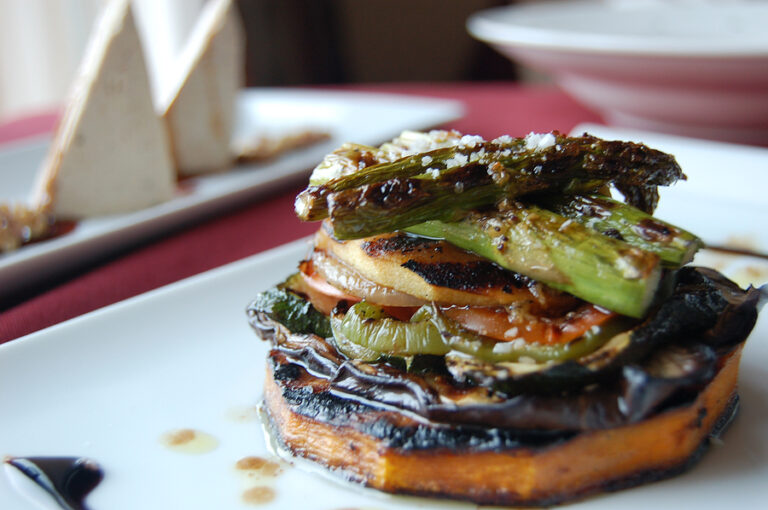
- Serve with a vinaigrette or sprinkle with bread crumbs, Parmesan cheese, or fresh basil or mint.
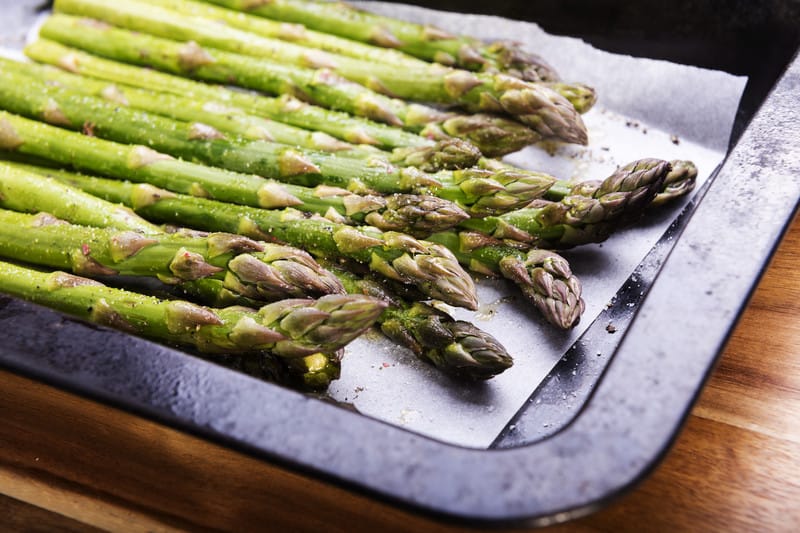
How to roast asparagus
- Arrange spears on a baking sheet with space between each spear.
- Drizzle spear with olive oil and season with kosher salt.
- Roast between 400° and 450°F for 10 to 15 minutes depending on the thickness of the spears; turn the spears midway.
- Roast spears until they are light brown and just crisp.
How to bake asparagus
- Use thick asparagus spears for baking; these will hold their form best during cooking.
- Bake asparagus with potatoes, artichokes, leeks, mushrooms, onions, carrots, turnips, and tomatoes.
How to stir fry asparagus
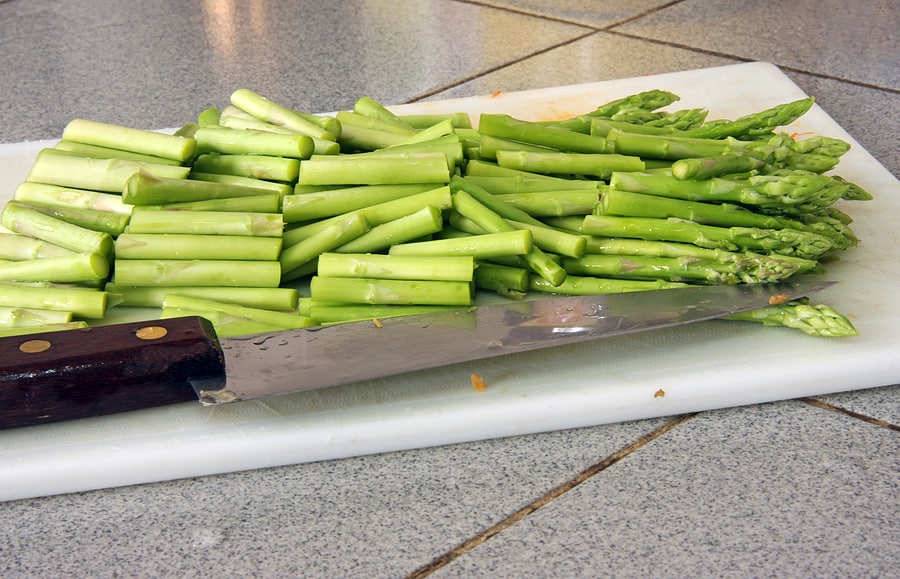
- Cut spears into 2-inch pieces to make them easier to cook.
- In a nonstick skillet or a wok, heat olive oil over high heat.
- Add the asparagus and salt and pepper lightly.
- Cook, stirring often, for about 3 minutes or until spears are easily pierced with the tip of a paring knife.
How to steam asparagus
Cut fresh raw asparagus into one-inch lengths with kitchen scissors. Then add them to the greens salad to add a bit of substance. Choose firm, plump, straight, round asparagus spears with tips that are tight and compact. Give the asparagus bunch a squeeze; if it squeaks, it’s fresh.
Steam asparagus for a side dish. Place the asparagus in a vegetable steamer over simmering water and steam, covered, until crunchy tender, about 5 minutes. Remove the asparagus and run it under cold water to stop further cooking. Place on a kitchen towel to drain.
Provençal Mayonnaise
Ingredients
- 2 cups tightly packed fresh spinach leaves, cooked, squeezed, and chopped
- 3 tablespoons finely minced scallions
- 3-4 tablespoons finely minced fresh parsley
- 2 large cloves garlic, peeled and crushed
- ½ cup crème fraîche or sour cream
- 1 cup mayonnaise
- juice of 1 large lemon
- salt and pepper to taste
Instructions
- Combine the spinach, scallions, parsley, garlic in a blender, add a little of the crème fraîche or sour cream and lemon juice and process until smooth. Season with salt and pepper and chill for 4 to 6 hours, or overnight.
- Spoon this mayonnaise sauce over the asparagus and garnish with chives and sliced boiled eggs.
- Serve lightly chilled.
Courses Side Dish
More ways to serve asparagus
Here are additional asparagus serving suggestions:
- Thinly slice raw asparagus and serve in salads.
- Serve fresh asparagus with a little melted butter and lemon juice. • Serve fresh or briefly blanched spears with a dip.
- Blanch or parboil for a platter of crudités (fresh vegetables) and dips. Trim the asparagus spears and place them in boiling water for 15 seconds for small spears, and 30 seconds for large spears, transfer to a paper towel, dry, and let cool.
- Toss cooked asparagus with browned butter or extra virgin olive oil and lemon juice.
- Dress steamed asparagus with vinaigrette.
- Serve asparagus with chive mayonnaise, mustard butter, a caper butter sauce, or the more elaborate—but not difficult to prepare–Hollandaise sauce.
- Sprinkle cooked asparagus with Romano or Parmesan cheese and put it under the broiler until heated.
- Serve asparagus on toast with Italian prosciutto and cream sauce.
- Stir-fry sliced asparagus spears until just tender.
- Roast seasoned asparagus in a hot oven; spread spears on a baking sheet and toss with olive oil. Roast at 425ºF for about 2 minutes, then shake the pan, turn over the spears, and roast until tender, 2 or 3 minutes more. Season with salt, pepper, or another seasoning.
- Grill asparagus: preheat the grill and grilling screen and spray the grate and screen with oil; toss the spears in olive oil and place them on the grilling screen perpendicular to the grate; grill 20 to 40 seconds per side over a medium-hot fire; they will soften within 20 seconds from removing them from the grill; season.
- Chop and use leftover asparagus in omelets, soups, or stir-fried; add them at the last minute so that they just warm.
- Overcooked asparagus can be puréed and used for soups or sauces; purée can be frozen for up to 3 months.
Asparagus flavor partners
- Asparagus has flavor affinities for butter, cheese, chervil, eggs, lemon, olive oil, pasta, rice or risotto, seafood, tarragon, and tomato.
Types of asparagus: green, purple, white
- There are more than 300 varieties of asparagus. Only about 20 are edible.
- Spears range in size from pencil-thin to two or three times as thick. Spears range in color from lush green to deep purple to white. White is not a natural color for asparagus. White asparagus is man-made when spears are purposely covered with soil and blanched white through the lack of exposure to sunlight.
- Asparagus can be divided into three main categories:
- Green asparagus is the most common. Green spears are harvested at about 6 to 8 inches in length. They are considered the most flavorful by many.
- White asparagus is favored by Northern Europeans. White spears are usually thick, smooth, and tender. They are harvested just after the tips break through the mounded soil that surrounds them. The most famous white asparagus is grown in Argenteuil just outside Paris.
- Purple asparagus has a fruity flavor and is the sweetest-tasting asparagus. Purple asparagus is harvested when only 2 or 3 inches tall.
- One asparagus variety called Viola is naturally purple, but the purple pigment turns green when heated.
Asparagus nutrition
- Asparagus contains vitamin A and is a fair source of iron and vitamins B and C and is a source of folic acid.
- There are 35 calories to the serving.
- About 94 percent of the weight of an asparagus spear is water.
Get to know asparagus
- Asparagus is a member of the lily of the valley family and is believed to have originated in the eastern Mediterranean where wild asparagus still grows. The word asparagus can be traced back to the Persian word asparag, meaning sprout.
- Asparagus—which is a perennial vegetable—was cultivated by the ancient Egyptians and Greeks. Early Roman records give instructions for cooking asparagus. After the fall of Rome, asparagus was cultivated in Syria, Egypt, and Spain. From Spain, its popularity spread throughout Europe.
- Asparagus shoots grow from an underground stem or crown. The first two years after planting, a bed of asparagus is not productive; the third-year spears are thick enough to be harvested. Individual asparagus plants can produce edible spears for more than 10 years.
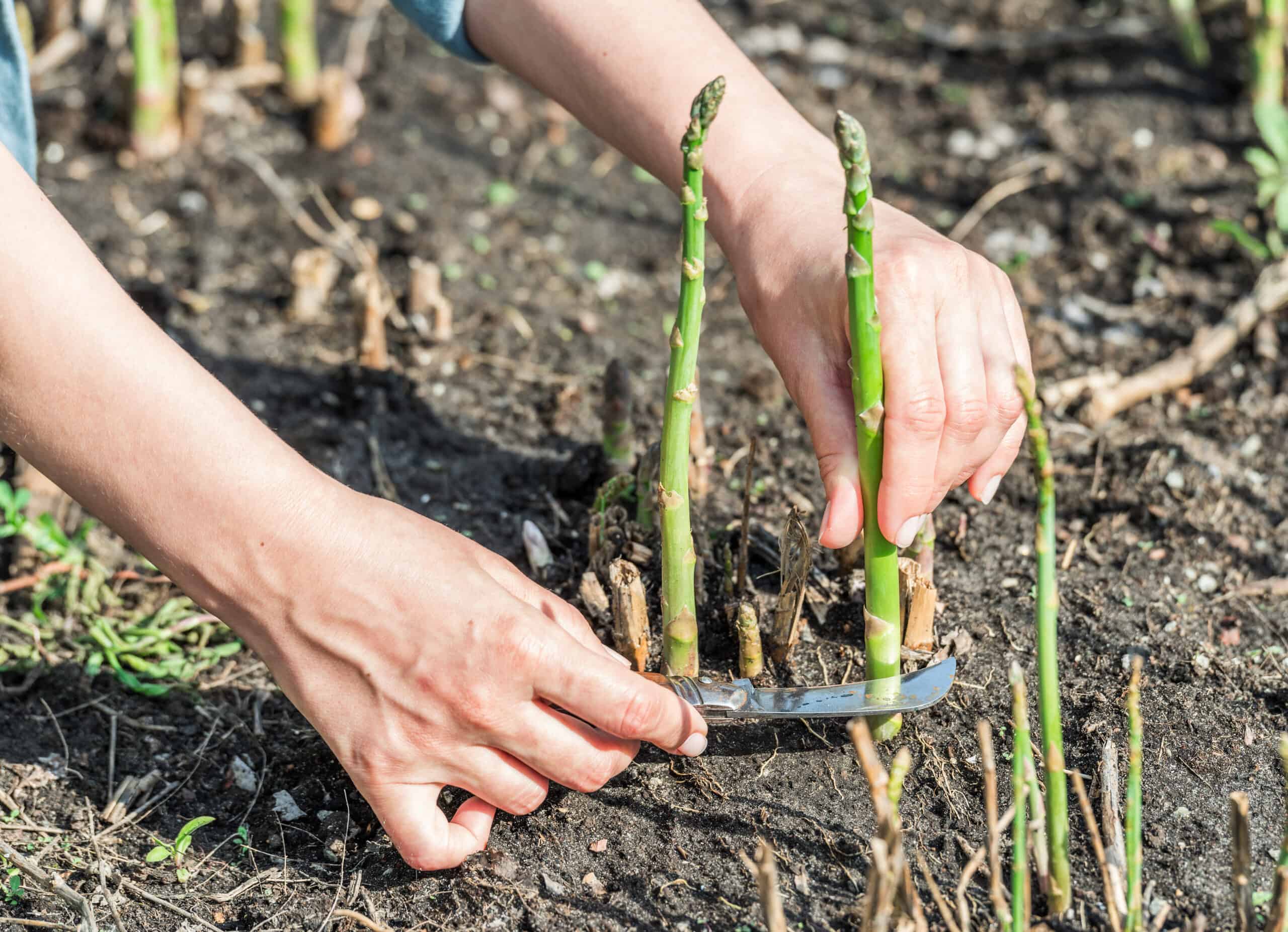
- Asparagus shoots must be harvested by hand with a special knife that is inserted in the ground near the shoot and tilted to cut it off above the root. About half the length of an asparagus stalk that comes to your table is underground growth.
The botanical name of asparagus is Asparagus officinalis.
Asparagus Growing Hub
Start here: The Ultimate Asparagus Growing Guide: From Seed to Harvest
Planting & Establishment
- How to Grow Asparagus from Seed vs. Crowns: Which Is Best?
- When to Plant Asparagus by USDA Zone
- How to Plant Asparagus
- How to Select the Best Asparagus Plants and Crowns
- Starting Asparagus from Seed Indoors: Step-by-Step Guide
- Direct Sowing Asparagus Seeds Outdoors
- Planting Asparagus Crowns Outdoors: A Beginner’s Guide
- Male vs. Female Asparagus Plants: What’s the Difference?
- How to Transplant Asparagus Without Damaging the Roots
Care & Maintenance
- The Best Companion Plants for Asparagus and What to Avoid
- How to Water Asparagus for Healthy Growth
- Fertilizing Asparagus: Feeding Tips for Bigger Harvests
- Seasonal Asparagus Care: Spring, Summer, and Fall Tasks
- How to Blanch Asparagus for White Spears
- How to Protect Asparagus from Winter Cold
Pests & Diseases
Harvest & Storage
- When and How to Start Harvesting Asparagus Spears
- How to Harvest and Store Asparagus
- Asparagus Harvest Schedule: Year-by-Year Guide
- How to Harvest Asparagus Twice a Year
Kitchen & Varieties
- Seven Ways to Cook and Serve Asparagus
- How to Cook Asparagus with No Recipe
- Canning the Asparagus Harvest
- Top Asparagus Varieties to Grow in Your Garden
Asparagus articles at Harvest to Table:
How to Harvest and Store Asparagus
Seven Ways to Cook and Serve Asparagus
How to Cook Asparagus with No Recipe
Asparagus Growing Problems Troubleshooting
Asparagus Beetle Organic Pest Control
Related articles:
Best Herbs for Container Growing
Garden Planning Books at Amazon:
- Vegetable Garden Almanac & Planner
- Kitchen Garden Grower’s Guide Vegetable Encyclopedia
- Vegetable Garden Grower’s Guide
- Tomato Grower’s Answer Book
More kitchen tips:
Bring your harvest to the table. Kitchen prep tips and easy recipes for the vegetables you grow. Click below for vegetable prep and recipes you can use now.
- Almonds
- Apples
- Apricot
- Aprium
- Artichoke
- Arugula
- Asparagus
- Avocado
- Bamboo Shoots
- Banana
- Basil
- Beans, Dried
- Beans. Long
- Beans, Shell
- Beans, Snap
- Beets
- Bitter Melon
- Blackberry
- Bok Choy
- Broccoli
- Broccoli Raab
- Brussels Sprouts
- Cabbage
- Cardoon
- Carrots
- Cauliflower
- Celeriac
- Celery
- Chard
- Chayote Squash
- Cherimoya
- Cherries
- Chestnut
- Chickpea
- Chinese Cabbage
- Chives
- Cilantro
- Citron
- Clementine
- Collards
- Coriander
- Corn, Sweet
- Corn, Baby
- Corn Salad, Mache
- Cranberry
- Cress
- Cucumber
- Daikon
- Dandelion
- Dill
- Eggplant
- Endive, Belgian
- Endive and Escarole
- Fava Beans
- Fig
- Florence Fennel
- Garlic
- Ginger
- Grapefruit
- Grapes
- Guava
- Horseradish
- Jerusalem Artichoke
- Jicama
- Jujube
- Kale
- Kiwifruit
- Kohlrabi
- Kumquat
- Leeks
- Lemongrass
- Lemons
- Lettuce
- Lime
- Mache (Corn Salad)
- Mandarin Orange
- Mango
- Maple Syrup
- Marjoram
- Melons
- Michihili
- Mint
- Mizuna
- Mushrooms
- Mushrooms, Cremini
- Mustard Greens
- Napa Cabbage
- Nectarine
- Okra
- Olives
- Olive oil
- Onions
- Oranges
- Oregano
- Parsley
- Parsley Root
- Parsnips
- Passion Fruit
- Pawpaw
- Peaches
- Pears
- Peas, Garden Snap
- Peas, Snow
- Pei Tsai
- Peppers, Chili
- Peppers, Sweet
- Persimmon
- Pineapple
- Pineapple Guava
- Plantain
- Plums
- Pluots
- Pomegranate
- Potatoes
- Prickly Pear
- Pumpkin
- Quince
- Radicchio
- Radishes
- Raspberries
- Rosemary
- Rhubarb
- Rutabaga
- Sage
- Salsify
- Sauerkraut
- Savory
- Shallots
- Sorrel
- Spinach
- Squash, Summer
- Squash, Winter
- Strawberries
- Sunchokes
- Sunflower
- Sweet Potato
- Swiss Chard
- Tangerine
- Taro
- Tarragon
- Thyme
- Tomatillo
- Tomato
- Turnip
- Turnip Greens
- Yams